




Most Chevy SUV comparisons give you numbers. Horsepower, fuel economy, cargo space. Those details matter, but they don’t always tell you what it’s actually like to live with the vehicle every day. That’s where many shoppers get stuck. You can compare specs across the Chevy Equinox, Chevy Traverse, and Chevy Blazer and still feel unsure which one fits your life.
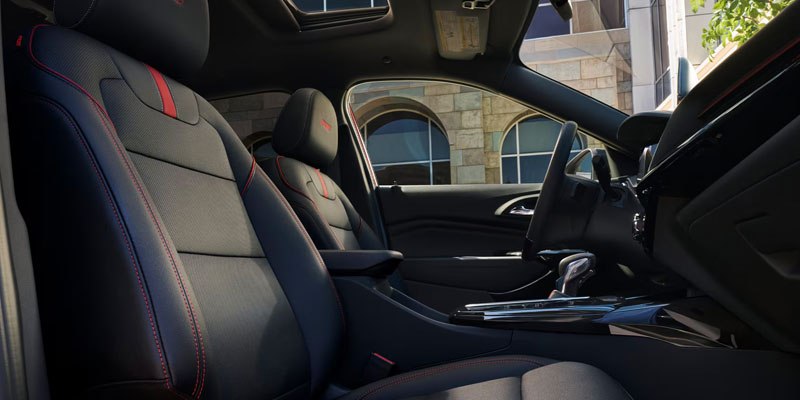
What shoppers are really trying to understand is how those differences show up in real driving situations. How the vehicle feels in traffic. How easy it is to park. Whether the technology actually makes things easier. This guide focuses on what most comparisons leave out so you can make a decision that holds up long after the purchase.
Why Most SUV Comparisons Fall Short
Many shoppers ask what to look for when buying an SUV because traditional comparisons don’t go far enough. They list features without explaining how those features affect daily use.
A spec sheet might tell you the Chevy Blazer has more horsepower than the Chevy Equinox, but it doesn’t explain what that means when merging onto a busy highway or navigating stop and go traffic. It might show cargo space differences between the Chevy Traverse and Chevy Equinox, but it won’t tell you how that impacts loading groceries, strollers, or travel gear.
Read the rest of this entry »What’s the Real Difference Between Chevy SUV Trims and Which One Actually Fits How You Drive?
Choosing between Chevy SUV trims can feel more complicated than it should be. Most shoppers aren’t just asking what LS, LT, RS, and Premier include. They’re trying to understand what those differences actually mean once the vehicle becomes part of their daily routine.
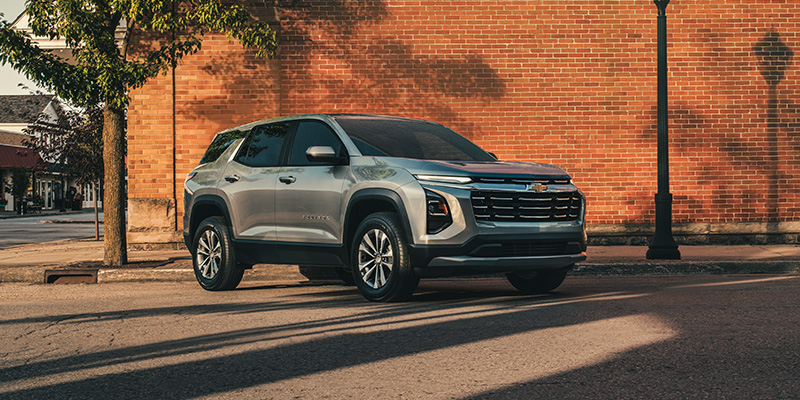
Chevy designs its SUV trims to give you clear progression in comfort, technology, and convenience. The key is understanding how those upgrades show up in real-world driving so you can choose a trim that fits your habits, not just your budget.
How Chevy SUV Trim Levels Are Structured Across the Lineup
Many shoppers researching Chevy SUVs ask what LS, LT, RS, and Premier actually represent. Chevy uses a consistent trim structure across models like the Chevy Equinox, Chevy Traverse, and Chevy Blazer so drivers can easily compare options.
The LS trim is the starting point. It focuses on essential features that support everyday driving, including core safety systems, touchscreen infotainment, and a comfortable cabin layout. The Chevy Equinox LS, for example, is built for drivers who want straightforward capability without added complexity.
Read the rest of this entry »Winter driving conditions in Wisconsin can expose vehicles to freezing temperatures, road salt, snow, and pothole damage. By the time spring arrives, many Chevrolet owners begin wondering what maintenance checks are important after months of cold weather driving. Seasonal inspections help ensure that systems affected by winter conditions continue operating safely and efficiently. Understanding how winter environments influence vehicle components such as the suspension, braking system, battery, and fluids helps drivers identify the most important maintenance checks to perform as temperatures begin to warm.
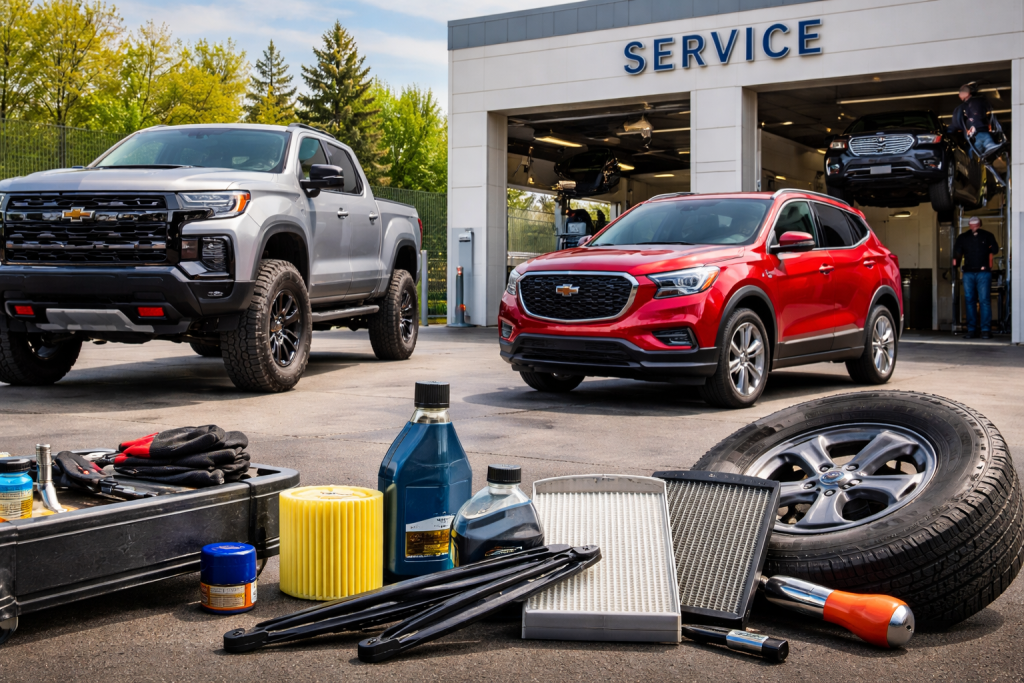
How Winter Road Salt Affects Chevrolet Undercarriage Components
Many drivers ask whether winter road salt can damage a vehicle and why spring inspections often include undercarriage cleaning. Road salt is used extensively during Wisconsin winters to improve road traction, but salt can accelerate corrosion on exposed metal components underneath the vehicle.
Salt lowers the freezing point of water, allowing snow and ice to melt. However, when salt mixes with moisture and oxygen, it creates an electrochemical reaction that speeds up the oxidation process that leads to rust.
The Chevrolet underbody and suspension components most exposed to road salt include:
Read the rest of this entry »Many drivers researching vehicle maintenance ask how often a cabin air filter should be replaced and whether it actually affects comfort inside the vehicle. The cabin air filter plays a critical role in the Chevrolet HVAC system by filtering the air that enters the passenger compartment through the heating and air conditioning system. While the component itself is small, its impact on air quality, ventilation performance, and seasonal driving comfort is significant. Understanding how the Chevrolet cabin air filtration system works and when replacement becomes necessary helps drivers maintain proper airflow, protect interior air quality, and ensure the vehicle’s climate control system continues operating efficiently.
How the Chevrolet Cabin Air Filtration System Works
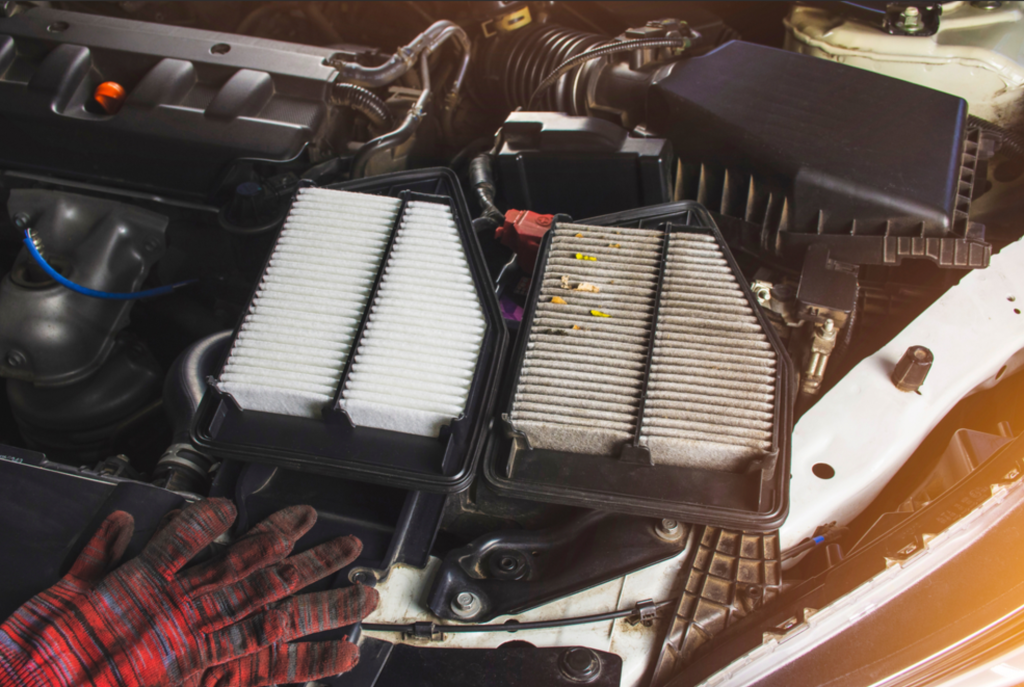
Many drivers researching vehicle maintenance schedules ask what a cabin air filter actually does and how it affects the air inside the vehicle. A cabin air filter is a filtration component installed within the vehicle’s heating, ventilation, and air conditioning system that removes dust, pollen, debris, and airborne contaminants before outside air enters the passenger compartment.
When outside air enters the Chevrolet HVAC system, it first passes through the cabin air filter before reaching the blower motor and ventilation ducts. The filter uses layered fibers designed to capture particulate matter while allowing clean air to flow through the system.
Inside a Chevrolet ventilation system, airflow follows a simple process:
Read the rest of this entry »The difference between a Chevrolet certified pre owned vehicle and a standard used vehicle is not cosmetic and it is not marketing language. The difference is structural. It comes down to inspection standards, warranty coverage, ownership risk, and long term cost predictability.

Both options can make sense depending on budget, mileage expectations, and ownership horizon. Understanding how each path is structured helps buyers choose based on risk tolerance rather than price alone.
What Certified Pre-Owned Actually Means at Chevrolet
A Chevrolet certified pre owned vehicle is not simply a used vehicle with a badge. It is a vehicle that must qualify under General Motors certification rules before it can be sold as CPO.
To qualify, a Chevrolet vehicle must:
Read the rest of this entry »Chevrolet Super Cruise is a hands free driver assistance system designed to reduce driver workload during highway driving while keeping the driver fully responsible for the vehicle. It is not self driving and it is not autonomous. Instead, Super Cruise uses a tightly controlled combination of mapping data, vehicle sensors, and driver attention monitoring to allow hands free steering on specific highways when all operating conditions are met.
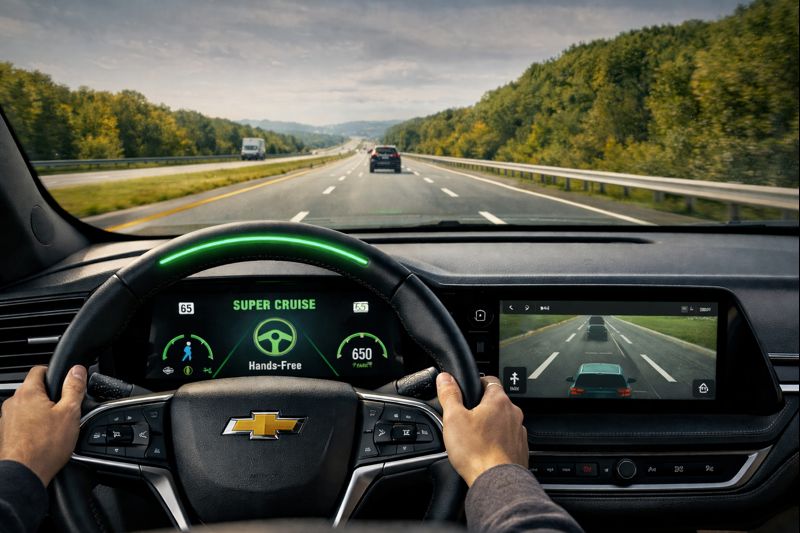
Understanding Super Cruise requires separating marketing shorthand from real system behavior. This technology is engineered around safety validation, redundancy, and driver accountability rather than independence from the driver.
What Chevrolet Super Cruise Actually Is
Super Cruise is classified as a Level 2 driver assistance system. This classification means the vehicle can assist with steering, acceleration, and braking simultaneously, but the driver must remain attentive and ready to take control at all times.
Key characteristics of Level 2 driver assistance include:
Read the rest of this entry »Wisconsin winter driving exposes the difference between marketing labels and real mechanical function. Snow covered highways, glare ice at intersections, slush buildup, and frequent freeze thaw cycles demand drivetrains that manage traction predictably, not just aggressively. Chevrolet offers both all wheel drive and four wheel drive systems across its lineup, but they are engineered for different winter realities. Understanding how each system behaves in real conditions is the key to choosing the right setup.
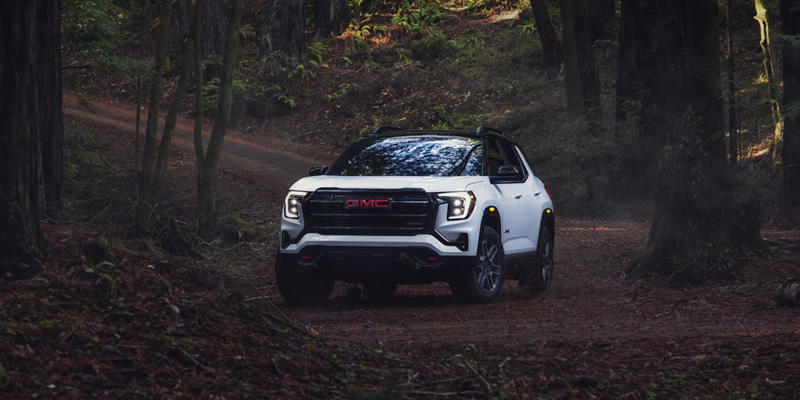
This comparison focuses on system design, driver involvement, and real winter performance rather than vehicle models or trim levels.
The Core Mechanical Difference Between AWD and 4WD
The primary distinction between AWD and 4WD is how torque is distributed and how the system is engaged.
All wheel drive systems are designed to operate automatically:
- Power is distributed between front and rear axles as needed
- Engagement happens without driver input
- Torque adjustments occur continuously and instantly
- Systems are optimized for mixed traction environments
Four wheel drive systems are designed for severe traction loss:
- Driver manually engages 4WD
- Front and rear axles are mechanically linked
- Torque is split evenly, regardless of surface grip
- Systems prioritize maximum traction over precision control
This fundamental difference determines how each system performs on Wisconsin roads, where surface conditions can change mile by mile.
How Chevrolet AWD Systems Handle Winter Conditions
Chevrolet AWD systems are engineered for on road winter driving where ice, packed snow, and slush are more common than deep powder.
Key AWD characteristics include:
- Reactive torque transfer when wheel slip is detected
- Seamless integration with traction control and stability control
- Improved stability during cornering on icy pavement
- No risk of drivetrain binding on dry or partially dry roads
In Wisconsin winters, where roads are often plowed but still slippery, AWD excels because it continuously adapts without driver intervention. The system supports smooth acceleration at intersections, controlled lane changes, and stable highway travel in variable conditions.
AWD is especially effective during:
- Icy mornings and evening refreeze
- Slushy highways with inconsistent traction
- Light to moderate snowfall on paved roads
- Urban and suburban winter commuting
How Chevrolet 4WD Systems Perform in Snow and Ice
Chevrolet 4WD systems are built for conditions where traction loss is extreme and persistent.
Key 4WD characteristics include:
- Mechanical locking of front and rear axles
- High torque delivery to all four wheels
- Superior performance in deep snow and unplowed areas
- Increased traction at low speeds
However, 4WD systems are not designed for continuous use on mixed surfaces. When engaged on ice or partially cleared roads, the locked drivetrain can reduce steering precision and increase understeer.
4WD performs best in:
- Deep snow accumulation
- Rural or unplowed roads
- Driveways, hills, and off pavement conditions
- Low speed travel where traction is limited everywhere
Improper use of 4WD on icy pavement is one of the most common winter driving mistakes, especially when drivers assume it improves braking or cornering control.
Braking and Stopping Distance Reality
A critical winter driving misconception is that AWD or 4WD improves braking.
In reality:
- Drivetrains do not shorten stopping distance
- Braking performance is controlled by tire grip and ABS
- Vehicle weight increases stopping distance on ice
- Stability control manages direction, not stopping power
Both AWD and 4WD vehicles rely on the same braking systems. This means a heavier 4WD truck may actually require more distance to stop on ice than a lighter AWD crossover, even with more driven wheels.
Driver Input and Error Risk
Another major difference between AWD and 4WD is the role of the driver.
AWD minimizes driver decision making:
- No need to anticipate traction loss
- No engagement errors
- System responds faster than human input
- Ideal for unpredictable winter conditions
4WD requires active decision making:
- Driver must choose when to engage or disengage
- Incorrect use can reduce control
- Engagement at the wrong time can stress drivetrain components
- Requires greater winter driving awareness
For many Wisconsin drivers, especially those who travel on mixed surfaces, AWD reduces the risk of human error during winter driving.
Ice vs Snow Performance Comparison
Wisconsin winters are dominated by ice more than deep snow, especially on main roads.
On ice:
- AWD offers better balance and control
- Stability systems work more effectively
- Steering response remains predictable
- 4WD offers limited advantage
In deep snow:
- 4WD provides superior forward traction
- Ground clearance becomes critical
- AWD may struggle once snow depth exceeds clearance
- Low speed traction favors 4WD
This distinction explains why AWD is often better suited for most winter driving scenarios, while 4WD remains valuable for specific environments.
The Role of Tires in Both Systems
No drivetrain can compensate for inadequate tires.
Winter capable tires provide:
- Softer rubber compounds for cold temperatures
- Improved ice braking performance
- Better steering feedback on snow
- Reduced reliance on electronic intervention
AWD paired with proper winter tires often outperforms 4WD vehicles on all season tires in real winter conditions.
Which System Is Better for Wisconsin Winter Roads
The answer depends on where and how you drive.
AWD is generally better for:
- Daily commuting
- Highway travel
- Mixed winter conditions
- Drivers who want automatic traction management
4WD is better for:
- Rural or unplowed roads
- Deep snow environments
- Low speed winter work conditions
- Drivers comfortable managing drivetrain settings
Final Winter Driving Perspective
Chevrolet AWD and 4WD systems are engineered for different winter challenges. AWD prioritizes stability, adaptability, and ease of use on icy and inconsistent roads. 4WD prioritizes raw traction in deep snow and severe conditions but requires disciplined driver input. Understanding these differences allows Wisconsin drivers to choose the system that aligns with their real world winter driving environment rather than assumptions about capability.
Wisconsin winters are not a single condition. They are a rotating mix of packed snow, glare ice, slush, refreeze cycles, subzero temperatures, and unevenly cleared roads. Choosing the right Chevrolet for these conditions requires understanding how winter driving systems actually work, not just which badge is on the tailgate. Drivetrain layout, electronic control systems, ground clearance, tire behavior, and vehicle weight all play measurable roles in winter performance.
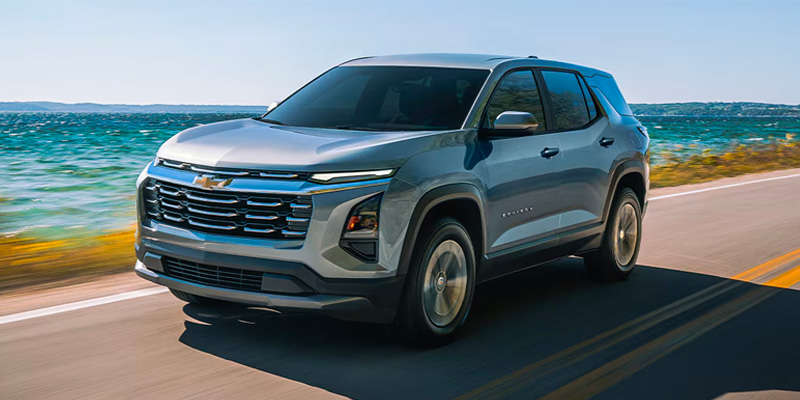
Below is a system focused breakdown of what matters most and which Chevy vehicles are best suited for Wisconsin winter driving.
What Actually Matters for Winter Driving Performance
Before comparing vehicles, it helps to clarify what winter capability really means.
Winter traction is controlled by several interacting systems:
- Tire compound and tread design, which determine grip in cold temperatures
- Drivetrain layout, which affects how torque is delivered during acceleration
- Stability and traction control systems, which manage wheel slip and vehicle balance
- Ground clearance, which determines whether the vehicle can move through deep or drifting snow
- Weight distribution, which affects braking stability and cornering control
No single system works alone. Winter confidence comes from how these components work together.
Read the rest of this entry »The 2025 Chevrolet Tahoe is a full size SUV engineered for drivers who need real passenger space, towing strength, and long term durability. Its capability comes from concrete engineering choices including body on frame construction, multiple powertrain options, and a trim lineup that changes both function and equipment. Understanding these details helps set accurate expectations for fuel economy, performance, and ownership.
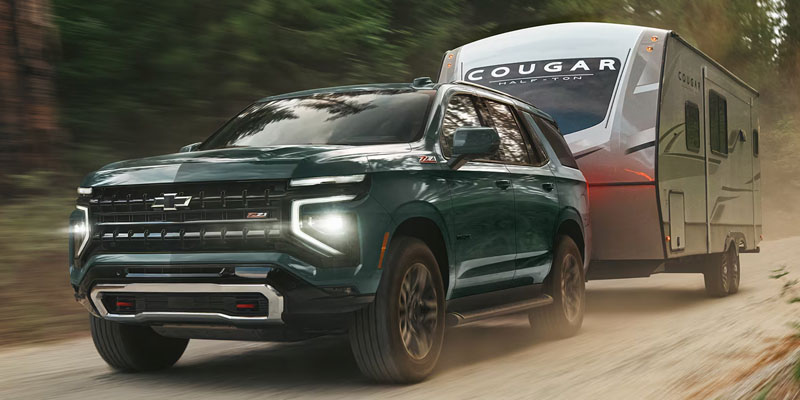
Full Size Dimensions and Platform Design
The Tahoe is built on a body on frame platform shared with Chevrolet full size trucks. This design supports higher towing loads and long term structural durability compared to unibody SUVs.
Key exterior and interior measurements include:
- Wheelbase approximately 120.9 inches
- Overall length approximately 210.7 inches
- Width approximately 81 inches without mirrors
Interior cargo capacity reflects true full size usability:
- About 25.5 cubic feet behind the third row
- About 72.6 cubic feet with the third row folded
- Up to approximately 122.9 cubic feet with second and third rows folded
These dimensions allow the Tahoe to carry passengers and cargo simultaneously without forcing tradeoffs.
Engine Options and Power Output
Chevrolet offers three distinct engines in the 2025 Tahoe, each designed for a different type of driver.
5.3 liter V8 gasoline engine
- Approximately 355 horsepower
- Approximately 383 pound feet of torque
- Standard engine on LS, LT, RST, Z71, and Premier trims
- Focuses on balanced power, everyday drivability, and towing capability
6.2 liter V8 gasoline engine
- Approximately 420 horsepower
- Approximately 460 pound feet of torque
- Available on RST, Premier, and High Country trims
- Designed for stronger acceleration, higher towing confidence, and performance oriented driving
3.0 liter Duramax turbo diesel
- Approximately 277 horsepower
- Approximately 460 pound feet of torque
- Available on most trims
- Emphasizes low end torque, highway efficiency, and sustained towing performance
All engines are paired with a ten speed automatic transmission that adjusts gear spacing to maintain power delivery while improving efficiency.
Real MPG Numbers by Engine
Fuel economy varies by drivetrain and engine choice. EPA estimates provide a consistent comparison baseline.
5.3 liter V8
- Rear wheel drive approximately 15 city and 20 highway
- Four wheel drive approximately 14 city and 19 highway
6.2 liter V8
- Rear wheel drive approximately 14 city and 20 highway
- Four wheel drive slightly lower depending on configuration
3.0 liter Duramax diesel
- Rear wheel drive approximately 21 city and 28 highway
- Four wheel drive approximately 20 city and 26 highway
Real world MPG will vary based on driving habits, terrain, passenger load, and towing use, but the diesel option consistently delivers the strongest efficiency for highway focused drivers.
Trim Levels and What Changes Between Them
The 2025 Tahoe trim lineup is structured to scale from functional to premium without changing the underlying platform.
LS
- Entry trim focused on value and space
- Standard 5.3 liter V8
- Ideal for fleet, family transport, or budget conscious buyers
LT
- Adds comfort and technology upgrades
- Available leather seating and advanced driver assistance
- Maintains focus on everyday usability
RST
- Sport oriented appearance
- Available 6.2 liter V8
- Larger wheels and performance focused styling
Z71
- Off road focused configuration
- Four wheel drive standard
- Skid plates, off road suspension tuning, and all terrain tires
Premier
- Luxury oriented without sacrificing capability
- Advanced trailering technology
- Available magnetic ride control
High Country
- Top tier trim
- Standard 6.2 liter V8
- Maximum technology, towing features, and interior refinement
Towing Capability and Stability Systems
When properly equipped, the Tahoe can tow up to approximately 8,400 pounds depending on engine and drivetrain configuration. Trailering technology includes trailer sway control, integrated brake controller availability, hitch guidance systems, and cooling upgrades that support sustained towing loads.
The body on frame construction and longer wheelbase contribute to stability when towing at highway speeds.
Longevity and Ownership Expectations
The Tahoe’s design prioritizes durability. The combination of a proven V8 engine lineup, heavy duty transmission, and truck based chassis supports long service life when properly maintained.
Routine maintenance including oil changes, transmission service, brake inspections, and cooling system care has a direct impact on longevity. Many Tahoe owners drive well into high mileage ranges while retaining reliability.
What Drivers Should Know Before Choosing a Tahoe
The Tahoe is not built to compete with midsize SUVs on fuel economy or parking convenience. It is built for drivers who need space, power, and confidence across years of ownership. Understanding the engine options, MPG realities, and trim differences ensures buyers choose the right configuration from the start.
At Koehne Chevrolet, our team helps drivers compare Tahoe trims, engines, and drivetrains based on real usage rather than surface level specs. If you are evaluating the 2025 Chevy Tahoe, we are here to help you choose the configuration that fits your needs with clarity and confidence.
All wheel drive and four wheel drive are often grouped together, but they are engineered for different traction problems. Chevrolet uses each system intentionally across its lineup based on vehicle type, drivetrain architecture, and real world use. Understanding how power is delivered and when each system is designed to engage is the key to choosing the right setup for your driving conditions.
How All Wheel Drive Systems Work
All wheel drive systems are designed to manage traction automatically during normal driving. In Chevrolet vehicles equipped with AWD, power is primarily sent to the front wheels under standard conditions to maximize efficiency. When wheel slip is detected, the system uses electronically controlled clutches and sensors to redistribute torque to the rear wheels.
This process happens continuously and without driver input. Wheel speed sensors, throttle position, steering angle, and road speed all feed into the system to determine how much torque is needed at each axle. The goal is stability and control on paved surfaces, especially in rain, light snow, or variable traction conditions.
AWD systems are optimized for on road use. They are not intended for extreme terrain but excel at maintaining grip during everyday driving where traction can change quickly.
How Four Wheel Drive Systems Differ
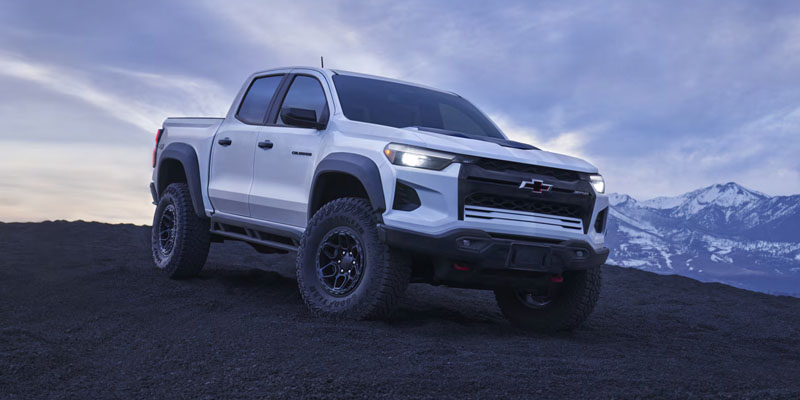
Four wheel drive systems are built for higher load and lower traction environments. In Chevrolet trucks and body on frame SUVs, 4WD systems use a transfer case to mechanically distribute power to both the front and rear axles.
Most modern Chevrolet 4WD systems offer multiple drive modes, including two wheel drive for normal pavement driving and selectable four wheel drive modes for low traction situations. Some configurations also include a low range gear set, which multiplies torque at low speeds. This is critical for deep snow, mud, steep grades, or off road conditions where controlled power delivery matters more than speed.
Because 4WD systems rely on mechanical engagement rather than continuous electronic modulation, they are better suited for sustained traction demands and heavier loads.
AWD vs 4WD in Winter Conditions
In winter driving, the difference comes down to traction consistency versus traction strength.
AWD provides constant monitoring and adjustment, which helps maintain stability on icy roads, slush, and changing pavement conditions. It is especially effective for drivers who spend most of their time on plowed roads but want added confidence when traction is unpredictable.
4WD becomes more effective when snow depth increases or when traction is consistently poor. Engaging four wheel drive locks power distribution more evenly across axles, which helps prevent wheel spin when climbing hills, pulling away from deep snow, or driving on unmaintained roads.
Impact on Fuel Economy and Daily Driving
AWD systems are designed to disengage when additional traction is not needed. This reduces drivetrain drag and helps preserve fuel efficiency during normal driving. Because AWD vehicles are typically built on lighter platforms, they also tend to feel more responsive and easier to maneuver in daily traffic.
4WD systems are heavier and more robust. The added drivetrain components increase weight and mechanical resistance, which can affect fuel economy. For drivers who do not regularly encounter demanding conditions, this can be more capability than necessary.
Chevy AWD and 4WD Applications Across the Lineup
Chevrolet applies AWD primarily to crossover and SUV platforms where comfort, stability, and efficiency are priorities. These systems support confident year round driving without requiring driver intervention.
4WD is reserved for Chevrolet trucks and select SUVs that are engineered for towing, hauling, and off road capability. These vehicles use reinforced frames, heavier duty axles, and cooling systems designed to handle the added stress that comes with sustained traction demands.
Choosing the Right Drivetrain for Your Needs
The right drivetrain depends on how traction is lost in your daily driving. If traction loss is occasional and happens at speed on paved roads, AWD is typically the better solution. If traction loss is severe, sustained, or combined with heavy loads, 4WD provides the mechanical strength needed to maintain control.
Understanding this distinction helps drivers choose a vehicle that matches their environment without paying for capability they will rarely use.
At Koehne Chevrolet, our team helps drivers compare Chevrolet AWD and 4WD systems based on real driving conditions, vehicle use, and long term ownership needs. If you want help determining which drivetrain fits your drive, our team is ready to walk through the options with clarity and confidence.

