




Blog / Marinette Chevrolet Dealer

Silverado 1500 or Silverado HD: Which Chevy Truck Makes More Sense for the Work You Do?

Silverado 1500 and Silverado HD trucks are built for very different workloads, but many truck shoppers are unsure which one makes more sense for the kind of towing, hauling, commuting, and daily driving they realistically do. A larger towing number does not automatically mean a truck is the better long term choice. The right truck usually depends on how weight is carried, how often towing happens, how the truck is driven during normal daily use, and how demanding the workload becomes over time.

Many buyers comparing Silverado 1500 and Silverado HD models focus almost entirely on maximum towing ratings without fully understanding how suspension systems, frame strength, payload capacity, ride quality, braking behavior, and drivability change between the two truck platforms. Understanding how those systems work together helps drivers choose a truck that matches real ownership needs instead of simply chasing the largest capability numbers available.

What Separates Silverado 1500 and Silverado HD Trucks

Silverado 1500 and Silverado HD trucks may appear similar from the outside, but underneath the body they are engineered around very different operating expectations.

The Silverado 1500 is designed to balance:

  • towing capability
  • payload flexibility
  • daily drivability
  • ride comfort
  • fuel efficiency
  • maneuverability

for drivers who may use the truck as both a work vehicle and a personal daily driver.

The Silverado HD lineup, including Silverado 2500 HD and Silverado 3500 HD models, is engineered more heavily around:

  • sustained towing loads
  • commercial workloads
  • larger trailer stability
  • heavier payload handling
  • long duration hauling demands

Those differences start with the frame itself. Silverado HD trucks use reinforced frame structures, heavier axle assemblies, stronger suspension calibration, and upgraded cooling systems designed to manage higher stress loads repeatedly over time.

This affects how the truck behaves mechanically during:

  • towing
  • braking
  • acceleration
  • weight transfer
  • trailer control

especially under heavier workloads.

For example, a Silverado 1500 towing a mid size camper occasionally may still feel composed and comfortable during unloaded driving throughout the week. A Silverado HD towing the same trailer may feel firmer, heavier, and less refined during normal commuting because the suspension is calibrated around much larger weight expectations.

That distinction matters because truck capability is not only about what the truck can tow once. It is also about how the truck behaves during the other 90 percent of ownership.

Why Payload and Towing Capacity Are Not the Same Thing

One of the biggest misconceptions among truck shoppers is assuming towing capacity tells the entire story. In reality, payload capacity often becomes just as important during real world truck use.

Towing capacity refers to how much weight the truck can pull behind it. Payload capacity refers to how much weight the truck itself can safely carry.

Payload includes:

  • passengers
  • cargo
  • toolboxes
  • bed loads
  • trailer tongue weight
  • aftermarket equipment

This is where many truck decisions become more complicated than simply choosing the truck with the highest towing number.

For example, a Silverado 1500 towing a travel trailer may still operate comfortably within towing limits, but additional cargo, passengers, and tongue weight may push payload capacity closer to its maximum.

Silverado HD trucks are engineered differently because heavier suspension systems, axle strength, and frame reinforcement allow them to manage larger combined loads more consistently.

This becomes important for drivers who regularly haul:

  • enclosed equipment trailers
  • construction materials
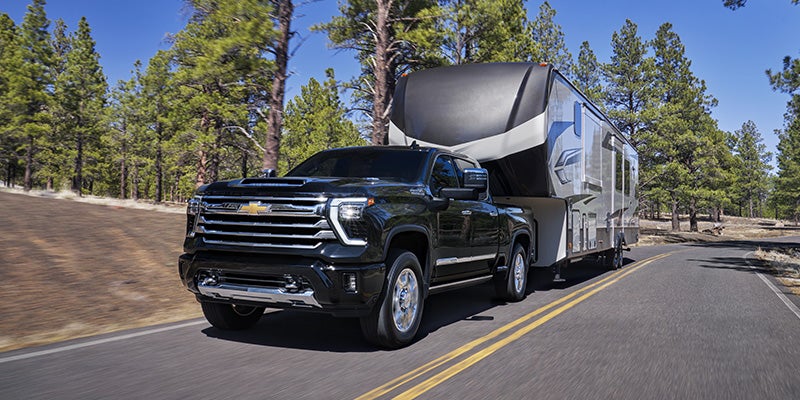
  • heavy fifth wheel campers
  • landscaping equipment
  • skid steers
  • worksite cargo

Payload management also affects stability. Trucks carrying heavier loads need suspension systems capable of controlling:

  • body movement
  • trailer sway
  • braking balance
  • steering response

under higher stress conditions.

Many competing truck comparison articles mention towing numbers without explaining how payload changes the real ownership equation. That often leads buyers to underestimate how quickly combined weight adds up during work or towing situations.

How Daily Driving Changes the Best Truck Choice

Truck capability matters, but so does how the truck behaves during everyday driving when it is not towing or hauling.

This is one reason Silverado 1500 models often make more sense for buyers who:

  • commute regularly
  • park in tighter spaces
  • use the truck as family transportation
  • tow occasionally instead of constantly
  • prioritize ride comfort
  • spend more time unloaded than loaded

Silverado 1500 suspension systems are generally tuned to provide a smoother unloaded ride because the truck is designed to balance versatility with comfort.

Silverado HD trucks behave differently because their heavier suspension systems are engineered to remain stable under significantly larger loads. Without heavy weight applied, that suspension calibration may feel:

  • firmer
  • stiffer
  • heavier during braking
  • less compliant over rough pavement

HD trucks may also:

  • require wider turning space
  • feel larger during parking
  • ride differently over uneven roads
  • accelerate differently when unloaded

This does not mean Silverado HD trucks are uncomfortable. It means they are optimized around a different operational purpose.

For example, a contractor towing equipment every day may benefit from the stability and durability of a Silverado HD. Meanwhile, a driver towing a fishing boat on weekends while commuting daily may find Silverado 1500 ownership more balanced overall.

Daily driving behavior often becomes one of the biggest deciding factors separating practical truck ownership from unnecessary overbuying.

When a Silverado HD Makes More Sense for Real Workloads

There are situations where Silverado HD capability becomes the smarter long term choice.

Drivers who regularly handle:

  • large equipment trailers
  • commercial towing
  • heavy construction payloads
  • large campers
  • horse trailers
  • multi vehicle hauling

may benefit substantially from the structural advantages built into Silverado HD trucks.

Those advantages include:

  • stronger rear axle assemblies
  • reinforced frames
  • upgraded cooling systems
  • heavier brakes
  • suspension systems designed for sustained load management

Under heavier workloads, these systems help improve:

  • towing stability
  • brake confidence
  • drivetrain durability
  • temperature management
  • long duration towing control

This matters especially for drivers towing through:

  • steep elevation changes
  • long highway distances
  • hot summer temperatures
  • repeated stop and go traffic
  • construction environments

Silverado HD trucks are designed to maintain composure under those repeated stress conditions more consistently than light duty trucks engineered around broader versatility.

For some business owners, the additional capability also supports future workload flexibility. A growing landscaping business, construction operation, or equipment hauling setup may eventually outgrow a light duty truck faster than expected.

The key difference is whether the workload is:

  • occasional
  • moderate
  • sustained
  • repetitive
  • commercially demanding

because truck systems are engineered differently depending on how consistently those loads are expected to occur.

Why Many Truck Shoppers Overbuy Capability

Many buyers assume more capability automatically creates a better ownership experience, but that is not always how truck ownership works in practice.

Capability comes with tradeoffs involving:

  • ride stiffness
  • vehicle size
  • ownership cost
  • tire expense
  • maneuverability
  • fuel consumption

This is one reason many Silverado 1500 owners ultimately find their trucks fully capable for:

  • recreational towing
  • homeowner projects
  • light contractor work
  • family travel
  • boat towing
  • ATV trailers
  • moderate payload hauling

without needing the heavier engineering of an HD platform.

Modern Silverado 1500 trucks already provide substantial towing and hauling capability compared with older truck generations. Many drivers searching “Silverado 1500 vs HD” are often surprised to realize their real world needs fall well within light duty capability ranges.

The best truck choice usually comes from evaluating:

  • how often towing happens
  • how heavy the loads are in real use
  • how the truck is used daily
  • whether commercial use is involved
  • how important ride comfort remains

rather than simply choosing the highest capability number available.

For many buyers, the smartest truck is not necessarily the biggest truck. It is the truck whose systems, workload expectations, daily drivability, and long term ownership behavior align most closely with how the vehicle will be used day to day.
Posted in:

Related Posts

Chevy SUV Comparison for Trax Trailblazer and Equinox

Chevy SUV Comparison for Trax Trailblazer and Equinox

Chevy SUV Comparison for Trax Trailblazer and Equinox A Chevy SUV comparison gets easier when you match size, traction, cargo room, and power to your routine. Trax, Trailblazer, and Equinox all seat five, yet each one takes a different approach. Therefore, the right starting point is how you drive, what you carry, and how much space you want. The details matter because similar dimensions can hide major mechanical and storage differences. Why Three Small Chevy SUVs Serve Different Routines Why does Chevrolet offer three SUVs that seem close in size? Each one places a different mix of space, power, and traction into a five passenger package. Therefore, a Chevy SUV comparison should look beyond seating count and exterior styling. Trax is the simplest of the three mechanically. It uses a 1.2 liter turbocharged three cylinder engine with 137 horsepower. Additionally, power goes through the front wheels, and Trax comes only with front wheel drive. Because of that layout, Trax suits drivers who do not need an all wheel drive configuration. Trailblazer adds more choices without moving into a much larger footprint. It starts with a 1.2 liter turbocharged engine and offers a 1.3 liter turbocharged engine. The stronger engine produces 155 horsepower, and Chevrolet offers all wheel drive. Additionally, Trailblazer offers a fold flat front passenger seat for longer cargo. Equinox moves the formula farther toward passenger space, cargo room, and towing. Its 1.5 liter turbocharged engine produces 175 horsepower. Chevrolet offers all wheel drive, and properly equipped versions can tow up to 1,500 pounds. As a result, Equinox serves needs that go beyond basic commuting and light cargo. Where Trax Makes Sense When is Trax enough SUV for your routine? Trax makes sense when compact dimensions, simple operation, and useful cargo space cover your normal needs. Therefore, its value comes from doing common tasks without adding equipment you may never use. The 2026 Trax offers about 54 cubic feet of maximum cargo space with the rear seats folded. That number is close to Trailblazer, which can surprise shoppers. However, cargo volume only tells part of the story. Trax uses a 60/40 split folding rear seat, so you can trade passenger space for cargo room. This setup works well for groceries, luggage, sports bags, and other common loads. In addition, the cabin still carries up to five people when both rear seatbacks remain upright. A Chevy SUV comparison also needs to address traction. Trax is front wheel drive only, so there is no all wheel drive version to choose. Therefore, shoppers who specifically want all wheel drive can narrow the field immediately. Power is straightforward as well. The 1.2 liter turbocharged engine makes 137 horsepower and 162 pound feet of torque. That output supports the Trax focus on commuting, errands, and everyday transportation. Still, shoppers should test acceleration with the passenger and cargo loads they normally carry. Why Trailblazer Offers a Different Kind of Utility What separates Trailblazer from Trax beyond styling? Trailblazer adds drivetrain choice, an available stronger engine, and a different approach to long cargo. Therefore, its advantages show up when your routine asks more from a small footprint. The standard 1.2 liter turbocharged engine makes 137 horsepower. An available 1.3 liter turbocharged engine raises output to 155 horsepower and 174 pound feet of torque. In addition, shoppers can choose available all wheel drive. That drivetrain choice can matter for people who want power sent to more than the front wheels. However, evaluate all wheel drive alongside tires, driving habits, and the routes you travel. It is one part of the overall setup. Moreover, cargo is another major distinction. Trailblazer offers about 54.4 cubic feet of maximum cargo room, almost matching Trax. Yet the fold flat front passenger seat changes what the cabin can carry. With that seat folded, Trailblazer can accept items up to about 8.5 feet long. Therefore, long boxes, packaged furniture, or recreational gear may fit more easily. A Chevy SUV comparison should separate cargo length from total cargo volume for this reason. Trailblazer can also tow up to 1,000 pounds when properly equipped. That rating gives Trailblazer a towing role that Trax does not offer. Still, shoppers should verify trailer weight, equipment, and vehicle limits before planning any tow. When Equinox Earns Its Extra Size When does the larger Equinox make sense? Equinox makes sense when passenger room, cargo volume, stronger output, or light towing become regular priorities. Therefore, it is the step up for shoppers who need more space without moving to a much larger SUV. The 2026 Equinox provides up to 63.5 cubic feet of maximum cargo volume. That is a clear increase over Trax and Trailblazer. In addition, the rear seat uses a 60/40 split, which supports mixed passenger and cargo loads. Its 1.5 liter turbocharged engine produces 175 horsepower and 203 pound feet of torque. The higher output gives Equinox more reserve for added passengers, cargo, and highway merging. However, the added size also changes parking, garage fit, and low speed maneuvering. In this Chevy SUV comparison, available all wheel drive gives Equinox another point of separation from Trax. It also keeps Equinox in the conversation for shoppers already considering Trailblazer with all wheel drive. Therefore, the final choice may shift toward interior space and towing needs. Properly equipped Equinox models can tow up to 1,500 pounds. That is 500 pounds more than Trailblazer and above the Trax rating. A Chevy SUV comparison should treat towing as a filter, not a minor specification. Match the SUV to What You Carry and Where You Drive Which differences should you test before choosing one? Start with traction, cargo shape, passenger space, power, and the places you drive most. Therefore, the best showroom comparison should involve more than sitting behind the wheel. First, open each cargo area and think about your usual load. A stroller, golf bags, tools, or large grocery runs can reveal differences that cubic feet alone cannot show. Additionally, fold the seats and check how the cargo floor and opening shape work for you. Next, sit in the rear seat after setting the front seat for your normal driving position. This check gives you a clearer sense of passenger room. Moreover, it can expose tradeoffs that exterior dimensions do not show. Then, compare Trax and Trailblazer if compact size is a priority. Trax keeps the formula simple with front wheel drive and one engine. Trailblazer adds all wheel drive, an available stronger engine, longer cargo space, and light towing. By contrast, Equinox adds more cargo volume, more engine output, and a higher towing rating. It also brings a larger exterior footprint. Therefore, shoppers should decide whether those gains match tasks they perform regularly. A Chevy SUV comparison works best when each specification connects to something you do. Trax suits simpler transportation and cargo needs. Trailblazer adds drivetrain and cargo choices in a compact package. Equinox adds more room, output, and towing for more demanding routines. Before choosing, drive each model and use the cabin like you would at home. Bring the child seat, sports bag, or cargo item that matters most. That hands on test can make the differences much easier to judge.

How Long Do Tahoes Last With Consistent Maintenance

How long do Tahoes last when the goal is to keep one well beyond the first 100,000 miles? A Tahoe's lifespan reflects how long its major mechanical components remain sound enough for continued driving. No mileage figure applies to every SUV. However, service records, repair history, prior use, and mechanical care can reveal far more than the odometer alone. How Many Miles Can a Tahoe Reach? A well maintained Chevrolet Tahoe can reach high mileage, but no fixed number can predict every vehicle's lifespan. Some examples reach 200,000 miles or more. However, reaching that point requires attention to fluids, cooling, brakes, suspension parts, and engine service. Mileage should be treated as one part of the picture. Therefore, shoppers should compare the odometer with service records and current mechanical state. A Tahoe with 140,000 documented miles may present fewer concerns than one with 90,000 neglected miles. In addition, age matters too. Rubber seals, hoses, bushings, and electrical parts can degrade even when annual mileage stays low. In addition, corrosion can become a concern in regions that use road salt during winter. Moreover, a strong service history gives context to the mileage shown. Therefore, shoppers should look for regular oil service, fluid changes, brake work, and cooling repairs. That history can show whether prior owners addressed wear before small issues became expensive repairs. Why Engine Oil Matters as Mileage Climbs Can regular oil service extend a Tahoe's service life? Engine oil forms a protective film between moving internal parts. It also carries heat and suspended contaminants away from sensitive surfaces. As oil ages, contamination rises and lubrication quality can decline. Therefore, delayed service can increase friction inside the engine. Bearings, camshaft surfaces, timing components, and cylinder walls all rely on proper lubrication. In addition, oil level matters as much as service timing. A leak or increased oil consumption can lower the amount circulating through the engine. Because of that, owners should check the level between service visits when mileage begins climbing. Furthermore, service records give used Tahoe shoppers useful clues. Repeated oil service suggests that prior owners paid attention to a basic engine need. Still, records should be considered beside current engine sound, leaks, warning lights, and diagnostic results. For this reason, a pre purchase inspection can add more context. A technician can look for seepage, unusual noises, stored fault codes, and other signs of wear. Therefore, shoppers do not have to rely only on the seller's description. Fluid Service Beyond the Engine Which fluids matter after a Tahoe begins accumulating higher mileage? Several fluids protect parts outside the engine. Each one supports a different mechanical function. Transmission fluid lubricates internal parts and supports hydraulic operation inside the transmission. Coolant carries heat away from the engine toward the radiator. Brake fluid transfers pedal force through the hydraulic brake circuit. Four wheel drive Tahoes may also use transfer case and differential fluids. These lubricants protect gears and bearings within the driveline. Therefore, service history for these areas can add useful context on higher mileage models. Shoppers should review records for: Transmission fluid service can show whether prior owners addressed internal lubrication and heat control. Coolant service can reveal whether the cooling circuit received routine attention before old fluid lost protective properties. Transfer case and differential service can show whether driveline lubricants were changed during prior ownership. Additionally, fluid condition can expose neglected care. Dark fluid, low levels, leaks, or burnt odors deserve closer inspection. However, color alone cannot diagnose every internal problem. A technician can compare fluid state with mileage, service history, and operating symptoms. Therefore, the strongest evaluation combines records with a physical inspection. How Prior Driving Demands Change Wear Does towing change what should be inspected on a used Tahoe? Towing places greater demand on cooling, braking, suspension, and driveline parts. That does not mean a Tahoe used for towing should be avoided. The important question is whether prior service matched the extra mechanical demand. Brakes may wear faster when stopping additional trailer weight. In addition, transmission temperatures can rise while pulling heavy loads. Beyond that, suspension parts carry repeated load changes. Bushings, shocks, wheel bearings, and tires can show wear after years of hauling passengers or trailers. Therefore, a road test should include attention to noises, vibration, steering feel, and braking response. By contrast, short trips create a different pattern. The engine may spend more time warming up without reaching full operating temperature. Consequently, moisture and fuel dilution can remain in the oil longer between drives. In addition, winter road salt adds another concern. Corrosion can develop on brake lines, fasteners, exhaust parts, and body structures. Therefore, climate history should be considered beside mileage when reviewing an older Tahoe. What Should You Check on a High Mileage Tahoe? A high mileage inspection compares the odometer with documented service, current mechanical state, and prior repair history. It should answer more than one question. The goal is to understand what has been maintained, what has been replaced, and what may need attention next. Therefore, start with service records before looking at individual parts. Consistent records can show oil changes, cooling work, brake service, and fluid changes. In addition, repair invoices can reveal whether major components were replaced or repaired. During the inspection, look for: Fluid leaks can point toward worn seals, hoses, gaskets, or connections. Uneven tire wear can indicate suspension, steering, or wheel geometry concerns. Warning lights or stored fault codes can reveal issues that need diagnosis before purchase. Moreover, the road test matters too. Listen for clunks, humming, vibration, or unusual engine noise. Therefore, drive at several speeds and test steering, braking, and acceleration. For this reason, a professional inspection can provide another layer of detail. A technician can examine areas that are difficult to assess from a driveway. That includes underbody corrosion, suspension play, fluid leaks, brake wear, and cooling concerns. How long do Tahoes last cannot be answered by mileage alone. A strong maintenance record, sound inspection, and careful repair history provide better context. Therefore, evaluate the whole SUV before deciding whether a high mileage Tahoe fits your plans.

2022 Chevy Colorado Used Truck and New Model Guide

The 2022 Chevy Colorado remains highly searched because it combines three engine choices with midsize truck dimensions. It also sits at an interesting point in the Colorado timeline. Therefore, used truck shoppers can compare familiar V6 and diesel choices against newer TurboMax trucks. In addition, CarBravo gives shoppers another structured route for finding a certified used Colorado. Why the 2022 Chevy Colorado Still Draws Interest The 2022 Colorado still draws attention because it offers several engine choices within a manageable midsize footprint. It also marks the final year before Chevrolet introduced the redesigned model. Therefore, used truck shoppers can compare an established generation with newer Colorado options. The 2022 lineup offered a four cylinder engine, a V6, and a Duramax diesel. Therefore, shoppers can search for a truck that matches lighter errands, stronger passing needs, or frequent trailering. Newer Colorado trucks use one main TurboMax engine family. In addition, the 2022 truck closed the earlier Colorado generation. Some shoppers prefer that familiar body, cabin layout, or powertrain selection. Others see it as a lower cost path into a midsize Chevrolet pickup. The Colorado also gives drivers an open bed and useful trailering ratings without full size truck dimensions. Consequently, it may fit garages, driveways, and parking spaces that feel tight for a Silverado. Search interest remains strong because the 2022 model sits between two truck eras. It offers earlier engine choices while still supporting modern commuting, hauling, and recreational travel. Does a Used 2022 Colorado Fit Your Routine? Truck fit measures whether one configuration supports passengers, cargo, trailers, parking, and weekly travel. Does a used 2022 Colorado fit your routine? Routine fit connects truck dimensions and equipment with the tasks you repeat most. A midsize pickup can feel easier to place on narrow streets and crowded lots. In addition, its mirror width and turning space may feel less demanding than a larger half ton truck. However, cabin and bed choices still change total length. Passenger needs deserve equal attention. A Crew Cab gives rear riders direct door access. By contrast, an Extended Cab places smaller rear doors behind the front doors. Therefore, frequent rear passengers may prefer the Crew Cab. Garage depth also matters. Measure the full parking area, not only the door opening. Include room for the tailgate, mirrors, walking space, and storage along the walls. The bed should match the items you carry most. Therefore, test coolers, tools, bikes, yard supplies, or work bins before choosing. A truck that fits your routine should handle those items without creating daily frustration. Match the Engine and Configuration to Your Work Configuration fit connects engine choice, drivetrain, cab, bed, payload, and trailer rating. Which 2022 Colorado setup matches your planned work? The correct setup must support the loaded trailer, passengers, cargo, and route. The base 2.5 liter four cylinder produced 200 horsepower. Properly equipped versions could tow up to 3,500 pounds. Therefore, it may suit commuting, home projects, and smaller trailers within the confirmed rating. The 3.6 liter V6 produced 308 horsepower. Properly equipped versions could tow up to 7,000 pounds. In addition, its stronger output may suit highway merging, passing, and heavier recreational trailers. The 2.8 liter Duramax diesel produced 369 pound feet of torque. Selected configurations could tow up to 7,700 pounds. Therefore, it may suit frequent trailering when the exact truck supports the loaded weight. Towing and payload measure different loads. Towing covers the trailer behind the truck. Payload covers passengers, bed cargo, accessories, and trailer tongue weight. For this reason, verify these items before choosing: Confirm the exact engine, drivetrain, cab, bed, and trailering equipment on the truck. Check the door label for the combined occupant and cargo limit. Compare the loaded trailer weight and tongue weight with the truck specific ratings. A published maximum should never replace the labels and records for the truck you are considering. What to Verify When Shopping a Used Colorado Used truck review confirms equipment, labels, records, mileage, and physical state. What should you verify before choosing a used Colorado? Verification confirms that the listing matches the truck, labels, records, and equipment. Check the vehicle identification number against the listed engine, drivetrain, cab, and trim. In addition, inspect the hitch area for factory or added equipment. Added hardware does not raise the original rating. Service records can show oil changes, brake work, tire replacement, and prior repairs. Therefore, ask which records remain available. Consistent records can make the truck easier to evaluate. Inspect the bed, tailgate, frame areas, and lower body for damage or heavy wear. Furthermore, review tire condition and tread depth. Uneven wear may point to a steering, suspension, or tire pressure concern. During the drive, test steering, braking, shifting, and four wheel drive when equipped. Listen for clunks, vibration, or wind noise. In addition, confirm that warning lights turn off after startup. A used truck choice should rest on the exact configuration and its current state. Model year reputation alone cannot answer those questions. How CarBravo Supports Used Colorado Shopping CarBravo adds certification steps, inspection requirements, recall checks, listed pricing, and stated coverage terms. What does CarBravo add when you shop for a used Colorado? CarBravo provides a structured certified used shopping path with listed vehicle details. A CarBravo listing can include inspection details, listed pricing, mileage, equipment, and coverage information. Therefore, shoppers can compare several used trucks with more consistent listing details. Safety recall checks also form part of the CarBravo process. In addition, certified listings may include limited warranty terms and other stated protections. Those terms should be reviewed for the specific truck. CarBravo does not remove the need for careful evaluation. The VIN, door label, service history, tires, hitch equipment, and current state still matter. However, certification gives shoppers a more organized starting point. Koehne Chevrolet can use CarBravo to connect shoppers with used Colorado inventory. Therefore, shoppers can compare a 2022 truck against other certified used Chevrolet pickups in one shopping path. Compare the 2022 Colorado With Newer Truck Options Model year comparison shows whether price, engine design, cabin equipment, or greater truck size fits your plans. Should you choose a 2022 Colorado or a newer truck? The choice connects your work, budget, cabin needs, and preferred equipment. A used 2022 Colorado may suit shoppers who want V6 or diesel choices. It may also offer a lower purchase price than a newer model. By contrast, newer Colorado trucks use the TurboMax engine and newer cabin technology. Current Colorado models also bring updated displays, camera views, and trailering tools. Therefore, a newer truck may suit drivers who place more weight on cabin technology and towing information. A Silverado may make more sense when loads grow beyond the Colorado configuration under review. It may also suit households needing a wider cabin or a larger bed. Use this path to narrow the choice: Choose a used 2022 Colorado when its exact engine, cab, bed, and ratings match your work. Compare a newer Colorado when updated power, cabin tools, and trailering technology matter more. Consider a Silverado when passenger room, payload, trailer weight, or bed space regularly exceed Colorado limits. The 2022 Chevy Colorado remains searched because it still answers a clear need. It offers multiple engines, useful truck ratings, and a smaller footprint. CarBravo can support the used search, while newer Colorado trucks give shoppers another path forward.