





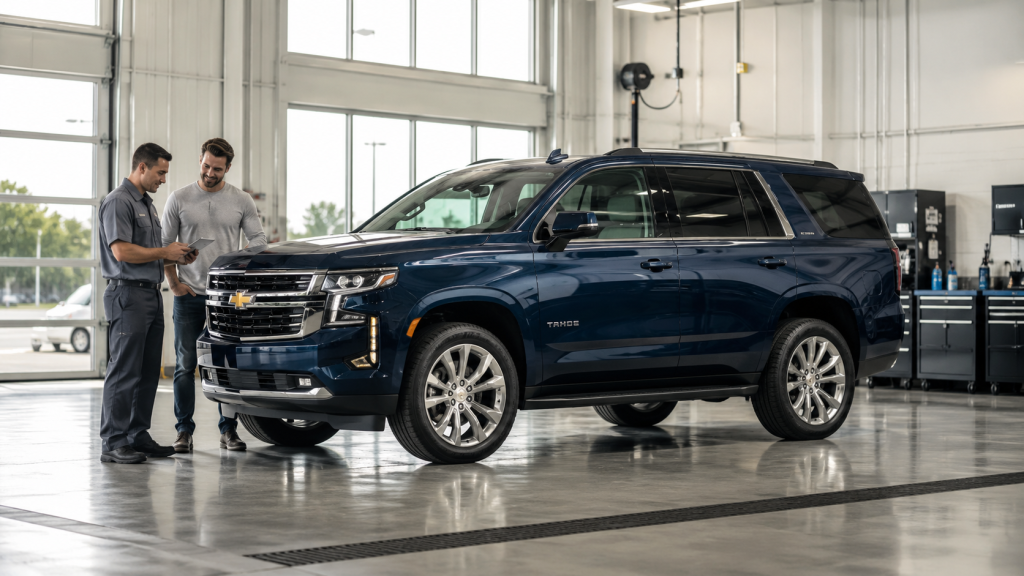
How long do Tahoes last when the goal is to keep one well beyond the first 100,000 miles? A Tahoe's lifespan reflects how long its major mechanical components remain sound enough for continued driving. No mileage figure applies to every SUV. However, service records, repair history, prior use, and mechanical care can reveal far more than the odometer alone.
How Many Miles Can a Tahoe Reach?
A well maintained Chevrolet Tahoe can reach high mileage, but no fixed number can predict every vehicle's lifespan. Some examples reach 200,000 miles or more. However, reaching that point requires attention to fluids, cooling, brakes, suspension parts, and engine service.
Mileage should be treated as one part of the picture. Therefore, shoppers should compare the odometer with service records and current mechanical state. A Tahoe with 140,000 documented miles may present fewer concerns than one with 90,000 neglected miles.
In addition, age matters too. Rubber seals, hoses, bushings, and electrical parts can degrade even when annual mileage stays low. In addition, corrosion can become a concern in regions that use road salt during winter.
Moreover, a strong service history gives context to the mileage shown. Therefore, shoppers should look for regular oil service, fluid changes, brake work, and cooling repairs. That history can show whether prior owners addressed wear before small issues became expensive repairs.
Why Engine Oil Matters as Mileage Climbs
Can regular oil service extend a Tahoe's service life? Engine oil forms a protective film between moving internal parts. It also carries heat and suspended contaminants away from sensitive surfaces.
As oil ages, contamination rises and lubrication quality can decline. Therefore, delayed service can increase friction inside the engine. Bearings, camshaft surfaces, timing components, and cylinder walls all rely on proper lubrication.
In addition, oil level matters as much as service timing. A leak or increased oil consumption can lower the amount circulating through the engine. Because of that, owners should check the level between service visits when mileage begins climbing.
Furthermore, service records give used Tahoe shoppers useful clues. Repeated oil service suggests that prior owners paid attention to a basic engine need. Still, records should be considered beside current engine sound, leaks, warning lights, and diagnostic results.
For this reason, a pre purchase inspection can add more context. A technician can look for seepage, unusual noises, stored fault codes, and other signs of wear. Therefore, shoppers do not have to rely only on the seller's description.
Fluid Service Beyond the Engine
Which fluids matter after a Tahoe begins accumulating higher mileage? Several fluids protect parts outside the engine. Each one supports a different mechanical function.
Transmission fluid lubricates internal parts and supports hydraulic operation inside the transmission. Coolant carries heat away from the engine toward the radiator. Brake fluid transfers pedal force through the hydraulic brake circuit.
Four wheel drive Tahoes may also use transfer case and differential fluids. These lubricants protect gears and bearings within the driveline. Therefore, service history for these areas can add useful context on higher mileage models.
Shoppers should review records for:
- Transmission fluid service can show whether prior owners addressed internal lubrication and heat control.
- Coolant service can reveal whether the cooling circuit received routine attention before old fluid lost protective properties.
- Transfer case and differential service can show whether driveline lubricants were changed during prior ownership.
Additionally, fluid condition can expose neglected care. Dark fluid, low levels, leaks, or burnt odors deserve closer inspection. However, color alone cannot diagnose every internal problem.
A technician can compare fluid state with mileage, service history, and operating symptoms. Therefore, the strongest evaluation combines records with a physical inspection.
How Prior Driving Demands Change Wear
Does towing change what should be inspected on a used Tahoe? Towing places greater demand on cooling, braking, suspension, and driveline parts. That does not mean a Tahoe used for towing should be avoided.
The important question is whether prior service matched the extra mechanical demand. Brakes may wear faster when stopping additional trailer weight. In addition, transmission temperatures can rise while pulling heavy loads.
Beyond that, suspension parts carry repeated load changes. Bushings, shocks, wheel bearings, and tires can show wear after years of hauling passengers or trailers. Therefore, a road test should include attention to noises, vibration, steering feel, and braking response.
By contrast, short trips create a different pattern. The engine may spend more time warming up without reaching full operating temperature. Consequently, moisture and fuel dilution can remain in the oil longer between drives.
In addition, winter road salt adds another concern. Corrosion can develop on brake lines, fasteners, exhaust parts, and body structures. Therefore, climate history should be considered beside mileage when reviewing an older Tahoe.
What Should You Check on a High Mileage Tahoe?
A high mileage inspection compares the odometer with documented service, current mechanical state, and prior repair history. It should answer more than one question. The goal is to understand what has been maintained, what has been replaced, and what may need attention next.
Therefore, start with service records before looking at individual parts. Consistent records can show oil changes, cooling work, brake service, and fluid changes. In addition, repair invoices can reveal whether major components were replaced or repaired.
During the inspection, look for:
- Fluid leaks can point toward worn seals, hoses, gaskets, or connections.
- Uneven tire wear can indicate suspension, steering, or wheel geometry concerns.
- Warning lights or stored fault codes can reveal issues that need diagnosis before purchase.
Moreover, the road test matters too. Listen for clunks, humming, vibration, or unusual engine noise. Therefore, drive at several speeds and test steering, braking, and acceleration.
For this reason, a professional inspection can provide another layer of detail. A technician can examine areas that are difficult to assess from a driveway. That includes underbody corrosion, suspension play, fluid leaks, brake wear, and cooling concerns.
How long do Tahoes last cannot be answered by mileage alone. A strong maintenance record, sound inspection, and careful repair history provide better context. Therefore, evaluate the whole SUV before deciding whether a high mileage Tahoe fits your plans.