




Chevy SUV Comparison for Trax Trailblazer and Equinox
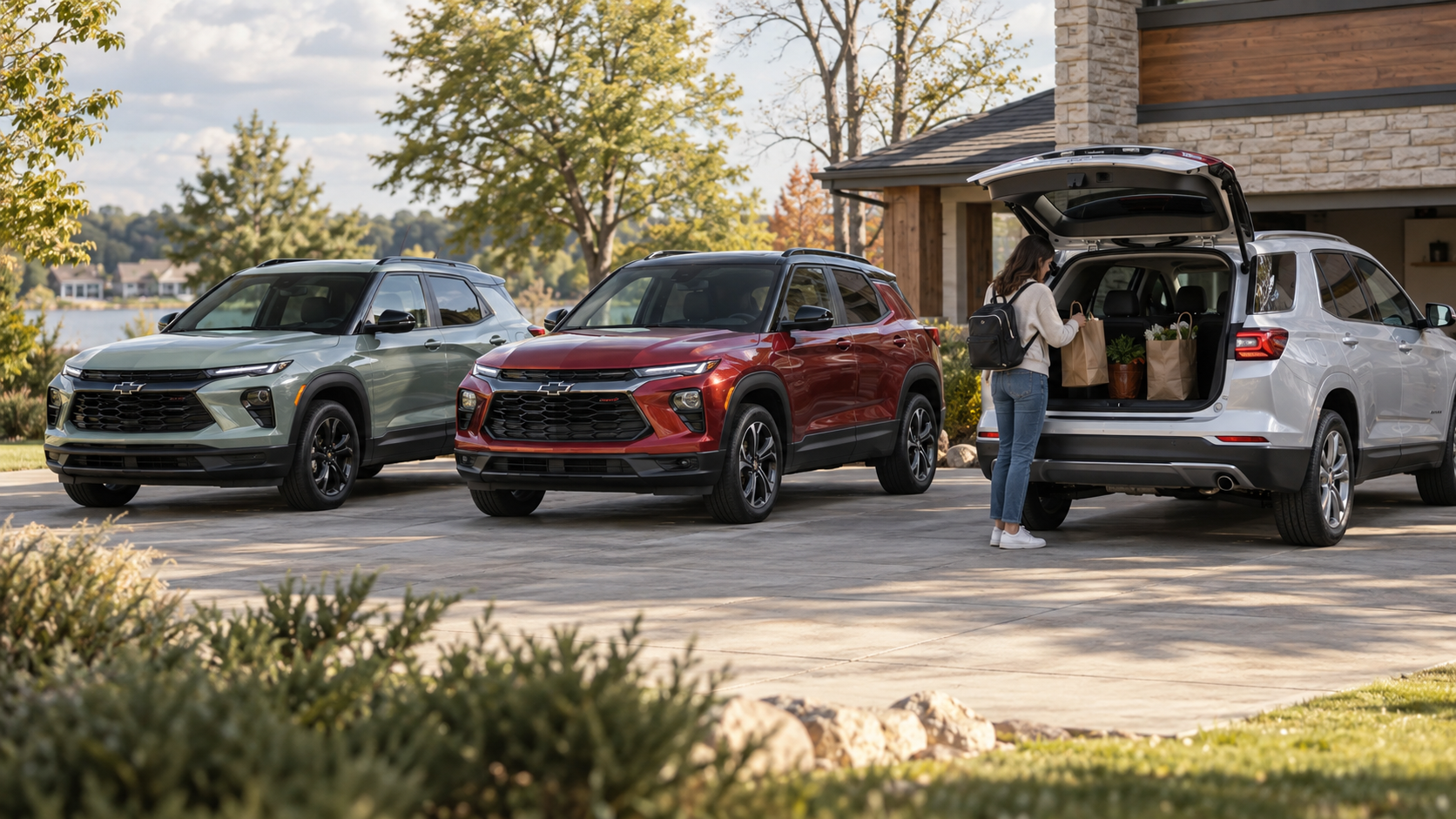
A Chevy SUV comparison gets easier when you match size, traction, cargo room, and power to your routine. Trax, Trailblazer, and Equinox all seat five, yet each one takes a different approach. Therefore, the right starting point is how you drive, what you carry, and how much space you want. The details matter because similar dimensions can hide major mechanical and storage differences.Why Three Small Chevy SUVs Serve Different Routines
Why does Chevrolet offer three SUVs that seem close in size? Each one places a different mix of space, power, and traction into a five passenger package. Therefore, a Chevy SUV comparison should look beyond seating count and exterior styling.Trax is the simplest of the three mechanically. It uses a 1.2 liter turbocharged three cylinder engine with 137 horsepower. Additionally, power goes through the front wheels, and Trax comes only with front wheel drive. Because of that layout, Trax suits drivers who do not need an all wheel drive configuration.
Trailblazer adds more choices without moving into a much larger footprint. It starts with a 1.2 liter turbocharged engine and offers a 1.3 liter turbocharged engine. The stronger engine produces 155 horsepower, and Chevrolet offers all wheel drive. Additionally, Trailblazer offers a fold flat front passenger seat for longer cargo.
Equinox moves the formula farther toward passenger space, cargo room, and towing. Its 1.5 liter turbocharged engine produces 175 horsepower. Chevrolet offers all wheel drive, and properly equipped versions can tow up to 1,500 pounds. As a result, Equinox serves needs that go beyond basic commuting and light cargo.
Where Trax Makes Sense
When is Trax enough SUV for your routine? Trax makes sense when compact dimensions, simple operation, and useful cargo space cover your normal needs. Therefore, its value comes from doing common tasks without adding equipment you may never use.The 2026 Trax offers about 54 cubic feet of maximum cargo space with the rear seats folded. That number is close to Trailblazer, which can surprise shoppers. However, cargo volume only tells part of the story.
Trax uses a 60/40 split folding rear seat, so you can trade passenger space for cargo room. This setup works well for groceries, luggage, sports bags, and other common loads. In addition, the cabin still carries up to five people when both rear seatbacks remain upright.
A Chevy SUV comparison also needs to address traction. Trax is front wheel drive only, so there is no all wheel drive version to choose. Therefore, shoppers who specifically want all wheel drive can narrow the field immediately.
Power is straightforward as well. The 1.2 liter turbocharged engine makes 137 horsepower and 162 pound feet of torque. That output supports the Trax focus on commuting, errands, and everyday transportation. Still, shoppers should test acceleration with the passenger and cargo loads they normally carry.
Why Trailblazer Offers a Different Kind of Utility
What separates Trailblazer from Trax beyond styling? Trailblazer adds drivetrain choice, an available stronger engine, and a different approach to long cargo. Therefore, its advantages show up when your routine asks more from a small footprint.The standard 1.2 liter turbocharged engine makes 137 horsepower. An available 1.3 liter turbocharged engine raises output to 155 horsepower and 174 pound feet of torque. In addition, shoppers can choose available all wheel drive.
That drivetrain choice can matter for people who want power sent to more than the front wheels. However, evaluate all wheel drive alongside tires, driving habits, and the routes you travel. It is one part of the overall setup.
Moreover, cargo is another major distinction. Trailblazer offers about 54.4 cubic feet of maximum cargo room, almost matching Trax. Yet the fold flat front passenger seat changes what the cabin can carry.
With that seat folded, Trailblazer can accept items up to about 8.5 feet long. Therefore, long boxes, packaged furniture, or recreational gear may fit more easily. A Chevy SUV comparison should separate cargo length from total cargo volume for this reason.
Trailblazer can also tow up to 1,000 pounds when properly equipped. That rating gives Trailblazer a towing role that Trax does not offer. Still, shoppers should verify trailer weight, equipment, and vehicle limits before planning any tow.
When Equinox Earns Its Extra Size
When does the larger Equinox make sense? Equinox makes sense when passenger room, cargo volume, stronger output, or light towing become regular priorities. Therefore, it is the step up for shoppers who need more space without moving to a much larger SUV.The 2026 Equinox provides up to 63.5 cubic feet of maximum cargo volume. That is a clear increase over Trax and Trailblazer. In addition, the rear seat uses a 60/40 split, which supports mixed passenger and cargo loads.
Its 1.5 liter turbocharged engine produces 175 horsepower and 203 pound feet of torque. The higher output gives Equinox more reserve for added passengers, cargo, and highway merging. However, the added size also changes parking, garage fit, and low speed maneuvering.
In this Chevy SUV comparison, available all wheel drive gives Equinox another point of separation from Trax. It also keeps Equinox in the conversation for shoppers already considering Trailblazer with all wheel drive. Therefore, the final choice may shift toward interior space and towing needs.
Properly equipped Equinox models can tow up to 1,500 pounds. That is 500 pounds more than Trailblazer and above the Trax rating. A Chevy SUV comparison should treat towing as a filter, not a minor specification.
Match the SUV to What You Carry and Where You Drive
Which differences should you test before choosing one? Start with traction, cargo shape, passenger space, power, and the places you drive most. Therefore, the best showroom comparison should involve more than sitting behind the wheel.First, open each cargo area and think about your usual load. A stroller, golf bags, tools, or large grocery runs can reveal differences that cubic feet alone cannot show. Additionally, fold the seats and check how the cargo floor and opening shape work for you.
Next, sit in the rear seat after setting the front seat for your normal driving position. This check gives you a clearer sense of passenger room. Moreover, it can expose tradeoffs that exterior dimensions do not show.
Then, compare Trax and Trailblazer if compact size is a priority. Trax keeps the formula simple with front wheel drive and one engine. Trailblazer adds all wheel drive, an available stronger engine, longer cargo space, and light towing.
By contrast, Equinox adds more cargo volume, more engine output, and a higher towing rating. It also brings a larger exterior footprint. Therefore, shoppers should decide whether those gains match tasks they perform regularly.
A Chevy SUV comparison works best when each specification connects to something you do. Trax suits simpler transportation and cargo needs. Trailblazer adds drivetrain and cargo choices in a compact package. Equinox adds more room, output, and towing for more demanding routines.
Before choosing, drive each model and use the cabin like you would at home. Bring the child seat, sports bag, or cargo item that matters most. That hands on test can make the differences much easier to judge.