




Blog / Marinette Chevrolet Dealer

Do You Need AWD in a Chevy SUV or Will FWD Do Everything You Need?

Many SUV shoppers assume AWD automatically makes a vehicle safer or more capable, but whether you truly need AWD in a Chevy SUV often depends more on climate, driving habits, road conditions, and daily use than drivetrain marketing alone. AWD and FWD systems are engineered differently because they solve traction challenges in different ways. Understanding how those systems distribute power, respond to changing road conditions, and affect long term ownership costs can help drivers choose the drivetrain that fits their real world needs instead of paying for capability they may rarely use.

For many drivers, the decision is not simply about whether AWD is better. The better question is when AWD creates a meaningful advantage and when a modern FWD Chevy SUV may already handle daily driving conditions comfortably.

How AWD and FWD Systems Work Differently

The primary difference between AWD and FWD systems involves how engine power reaches the wheels and how the vehicle responds when traction becomes limited.

In a FWD system, power is delivered only to the front wheels. This layout remains common because it reduces drivetrain weight, improves packaging efficiency, and often supports better fuel economy. Front wheel drive vehicles also benefit from having the engine’s weight positioned directly over the driven wheels, which can help improve traction during rain, colder temperatures, and light snow conditions.

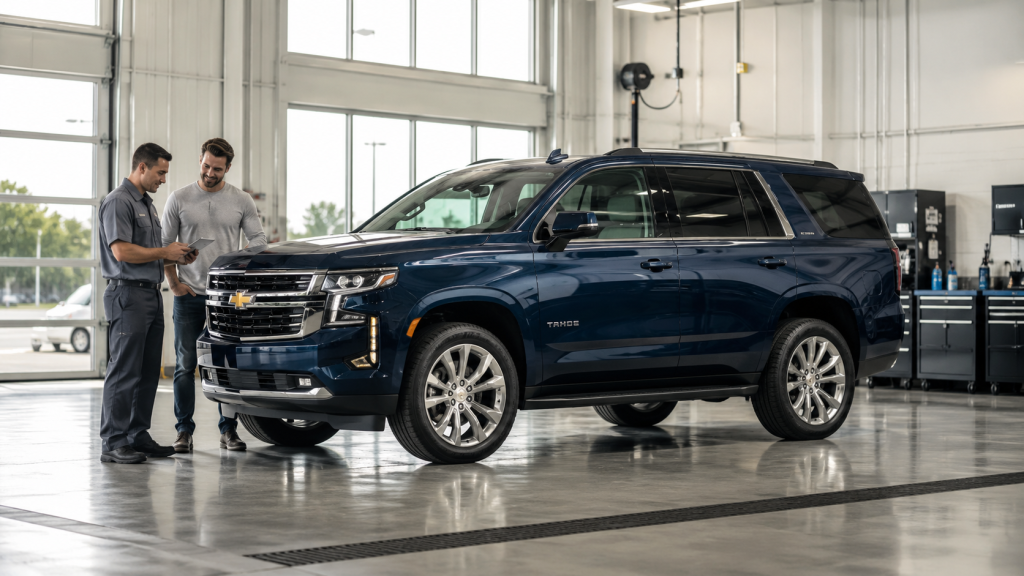
AWD systems behave differently because they are designed to distribute power between the front and rear wheels when additional traction is needed. In Chevy SUVs like the Chevrolet Traverse AWD or Chevrolet Tahoe 4WD, sensors monitor wheel behavior and redirect torque when wheel slip is detected. That allows the vehicle to respond more effectively when road grip changes suddenly.

Many shoppers searching “AWD vs FWD SUV” assume AWD automatically guarantees better winter safety, but traction depends on more than drivetrain layout alone. Tire quality, road treatment, vehicle weight, and driver behavior all influence how the SUV performs during:

  • snow
  • rain
  • slush
  • icy intersections

This is one reason winter tires may improve cold weather performance more dramatically than drivetrain choice alone in some situations.

Why Weather and Climate Change the AWD Decision

One of the biggest reasons drivers consider AWD is confidence during poor weather conditions. Search behavior consistently shows shoppers asking whether AWD is worth it in snow and whether FWD can still handle winter driving safely.

The answer depends heavily on how often low traction conditions occur during normal ownership.

Drivers living in areas with:

  • frequent snowfall
  • untreated roads
  • steep hills
  • mountain travel
  • rural highways

may benefit more consistently from AWD systems because those conditions challenge traction regularly throughout the year.

For example, a Chevrolet Traverse AWD may provide additional stability during hill climbs, snow packed roads, and slippery highway merging because the drivetrain can redirect power as wheel grip changes. That flexibility becomes more useful when weather conditions remain unpredictable or severe for extended periods.

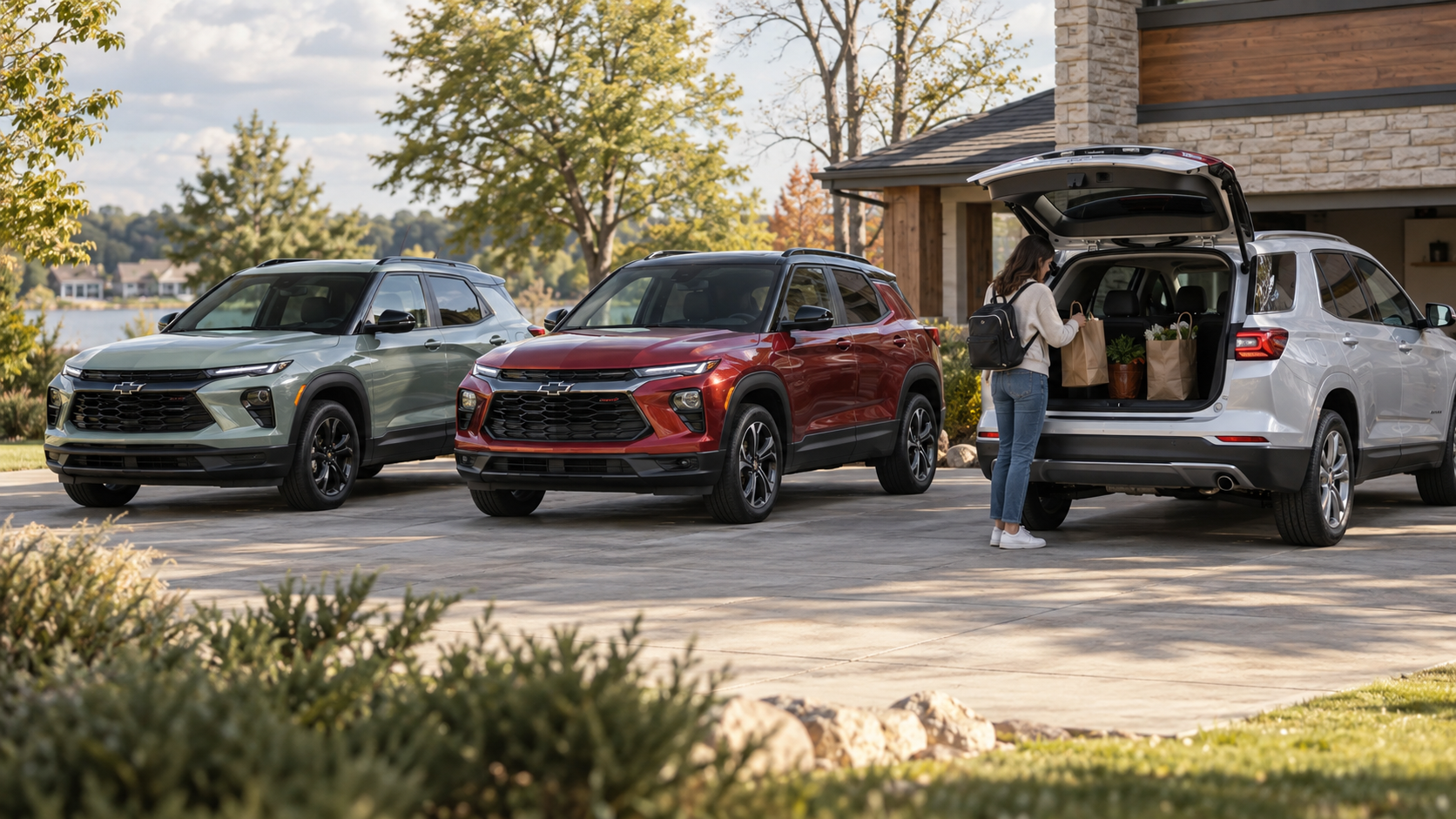
Meanwhile, many drivers in milder climates may rarely encounter situations where AWD significantly changes daily driving behavior. A Chevrolet Equinox FWD or Chevrolet Trax FWD may already provide stable commuting performance during:

  • highway travel
  • urban driving
  • rain conditions
  • occasional winter weather

especially in areas where roads are maintained and snow accumulation remains limited.

This is where many competitor articles oversimplify the decision. AWD capability matters most when road conditions consistently justify the additional drivetrain complexity. Without frequent low traction exposure, many drivers may never fully use the benefits AWD systems are engineered to provide.

How Daily Driving and Fuel Economy Influence Drivetrain Choice

AWD systems improve traction flexibility, but they also add additional mechanical components to the vehicle. Those systems often include rear differentials, driveshafts, electronic couplings, and additional axle hardware that increase both drivetrain complexity and overall vehicle weight.

That additional weight affects how the SUV behaves during normal daily driving. Compared with similar FWD models, AWD vehicles may experience:

  • lower fuel economy
  • slightly heavier driving feel
  • increased rotational resistance
  • different long term maintenance needs

For drivers who spend most of their time commuting on dry pavement, those tradeoffs may become important over long term ownership.

A Chevrolet Trax FWD or Chevrolet Equinox FWD may provide stronger efficiency, lighter handling feel, and lower operating costs for drivers focused primarily on commuting, highway travel, and suburban driving. In many ownership situations, FWD systems already provide the traction most drivers need during normal road conditions.

AWD systems may also influence maintenance planning because all driven wheels must work together consistently. Tire wear, alignment condition, and drivetrain servicing become more important in vehicles where power is distributed across multiple axles.

This does not mean AWD creates excessive ownership difficulty. It simply means AWD systems prioritize traction capability over maximum efficiency. For some drivers that tradeoff is worthwhile. For others, especially those who rarely encounter severe weather, FWD ownership may align more naturally with daily driving needs.

When AWD Makes the Most Sense for Chevy SUV Owners

There are many situations where AWD capability provides meaningful long term value. Drivers who regularly experience changing weather conditions or uneven terrain may benefit substantially from the added traction flexibility AWD systems provide.

Chevy SUVs like the Chevrolet Tahoe, Chevrolet Traverse, and Chevrolet Blazer AWD models often make more sense for drivers who:

  • travel through snow regularly
  • encounter steep elevation changes
  • tow smaller trailers
  • drive on gravel or uneven roads
  • experience frequent heavy rain

because traction conditions may change quickly during normal ownership.

AWD systems are especially useful during acceleration when wheel slip occurs. By redistributing torque between axles, the vehicle can maintain forward movement more effectively on slippery surfaces.

For families who travel frequently during winter weather, AWD may also improve confidence during:

  • lane changes
  • hill climbs
  • highway merging
  • stoplight acceleration in snow

Still, AWD does not eliminate environmental driving risks. Tire condition, speed control, and road conditions remain major factors in overall vehicle stability.

Many shoppers researching “best drivetrain for winter driving” are ultimately trying to determine whether their environment creates enough traction challenges to justify AWD ownership over the long term.

Why Many Drivers May Not Need AWD Full Time

Many SUV owners spend the majority of their driving time on dry, paved roads where traction conditions remain relatively stable. In those situations, modern FWD SUVs already provide predictable handling, strong stability control systems, and reliable wet weather performance for everyday commuting.

This is one reason many drivers discover that a Chevrolet Equinox FWD or Chevrolet Trax FWD already supports their needs comfortably while also reducing:

  • ownership costs
  • drivetrain complexity
  • fuel consumption
  • unnecessary weight

Search behavior around “do you really need AWD” often reflects uncertainty around whether marketing language aligns with realistic ownership behavior. Many drivers associate AWD with safety and capability, but the value of AWD depends heavily on how frequently low traction conditions occur during normal use.

The best drivetrain choice usually comes down to climate exposure, driving patterns, terrain, and ownership priorities rather than assuming one system is universally superior.

For some drivers, AWD capability creates meaningful confidence and flexibility throughout ownership. For others, FWD may already provide the efficiency, traction, and practicality needed for the way the SUV will realistically be driven day to day.
Posted in:

Related Posts

How Long Do Tahoes Last With Consistent Maintenance

How long do Tahoes last when the goal is to keep one well beyond the first 100,000 miles? A Tahoe's lifespan reflects how long its major mechanical components remain sound enough for continued driving. No mileage figure applies to every SUV. However, service records, repair history, prior use, and mechanical care can reveal far more than the odometer alone. How Many Miles Can a Tahoe Reach? A well maintained Chevrolet Tahoe can reach high mileage, but no fixed number can predict every vehicle's lifespan. Some examples reach 200,000 miles or more. However, reaching that point requires attention to fluids, cooling, brakes, suspension parts, and engine service. Mileage should be treated as one part of the picture. Therefore, shoppers should compare the odometer with service records and current mechanical state. A Tahoe with 140,000 documented miles may present fewer concerns than one with 90,000 neglected miles. more In addition, age matters too. Rubber seals, hoses, bushings, and electrical parts can degrade even when annual mileage stays low. In addition, corrosion can become a concern in regions that use road salt during winter. Moreover, a strong service history gives context to the mileage shown. Therefore, shoppers should look for regular oil service, fluid changes, brake work, and cooling repairs. That history can show whether prior owners addressed wear before small issues became expensive repairs. Why Engine Oil Matters as Mileage Climbs Can regular oil service extend a Tahoe's service life? Engine oil forms a protective film between moving internal parts. It also carries heat and suspended contaminants away from sensitive surfaces. As oil ages, contamination rises and lubrication quality can decline. Therefore, delayed service can increase friction inside the engine. Bearings, camshaft surfaces, timing components, and cylinder walls all rely on proper lubrication. In addition, oil level matters as much as service timing. A leak or increased oil consumption can lower the amount circulating through the engine. Because of that, owners should check the level between service visits when mileage begins climbing. Furthermore, service records give used Tahoe shoppers useful clues. Repeated oil service suggests that prior owners paid attention to a basic engine need. Still, records should be considered beside current engine sound, leaks, warning lights, and diagnostic results. For this reason, a pre purchase inspection can add more context. A technician can look for seepage, unusual noises, stored fault codes, and other signs of wear. Therefore, shoppers do not have to rely only on the seller's description. Fluid Service Beyond the Engine Which fluids matter after a Tahoe begins accumulating higher mileage? Several fluids protect parts outside the engine. Each one supports a different mechanical function. Transmission fluid lubricates internal parts and supports hydraulic operation inside the transmission. Coolant carries heat away from the engine toward the radiator. Brake fluid transfers pedal force through the hydraulic brake circuit. Four wheel drive Tahoes may also use transfer case and differential fluids. These lubricants protect gears and bearings within the driveline. Therefore, service history for these areas can add useful context on higher mileage models. Shoppers should review records for: Transmission fluid service can show whether prior owners addressed internal lubrication and heat control. Coolant service can reveal whether the cooling circuit received routine attention before old fluid lost protective properties. Transfer case and differential service can show whether driveline lubricants were changed during prior ownership. Additionally, fluid condition can expose neglected care. Dark fluid, low levels, leaks, or burnt odors deserve closer inspection. However, color alone cannot diagnose every internal problem. A technician can compare fluid state with mileage, service history, and operating symptoms. Therefore, the strongest evaluation combines records with a physical inspection. How Prior Driving Demands Change Wear Does towing change what should be inspected on a used Tahoe? Towing places greater demand on cooling, braking, suspension, and driveline parts. That does not mean a Tahoe used for towing should be avoided. The important question is whether prior service matched the extra mechanical demand. Brakes may wear faster when stopping additional trailer weight. In addition, transmission temperatures can rise while pulling heavy loads. Beyond that, suspension parts carry repeated load changes. Bushings, shocks, wheel bearings, and tires can show wear after years of hauling passengers or trailers. Therefore, a road test should include attention to noises, vibration, steering feel, and braking response. By contrast, short trips create a different pattern. The engine may spend more time warming up without reaching full operating temperature. Consequently, moisture and fuel dilution can remain in the oil longer between drives. In addition, winter road salt adds another concern. Corrosion can develop on brake lines, fasteners, exhaust parts, and body structures. Therefore, climate history should be considered beside mileage when reviewing an older Tahoe. What Should You Check on a High Mileage Tahoe? A high mileage inspection compares the odometer with documented service, current mechanical state, and prior repair history. It should answer more than one question. The goal is to understand what has been maintained, what has been replaced, and what may need attention next. Therefore, start with service records before looking at individual parts. Consistent records can show oil changes, cooling work, brake service, and fluid changes. In addition, repair invoices can reveal whether major components were replaced or repaired. During the inspection, look for: Fluid leaks can point toward worn seals, hoses, gaskets, or connections. Uneven tire wear can indicate suspension, steering, or wheel geometry concerns. Warning lights or stored fault codes can reveal issues that need diagnosis before purchase. Moreover, the road test matters too. Listen for clunks, humming, vibration, or unusual engine noise. Therefore, drive at several speeds and test steering, braking, and acceleration. For this reason, a professional inspection can provide another layer of detail. A technician can examine areas that are difficult to assess from a driveway. That includes underbody corrosion, suspension play, fluid leaks, brake wear, and cooling concerns. How long do Tahoes last cannot be answered by mileage alone. A strong maintenance record, sound inspection, and careful repair history provide better context. Therefore, evaluate the whole SUV before deciding whether a high mileage Tahoe fits your plans.

2022 Chevy Colorado Used Truck and New Model Guide

The 2022 Chevy Colorado remains highly searched because it combines three engine choices with midsize truck dimensions. It also sits at an interesting point in the Colorado timeline. Therefore, used truck shoppers can compare familiar V6 and diesel choices against newer TurboMax trucks. In addition, CarBravo gives shoppers another structured route for finding a certified used Colorado. Why the 2022 Chevy Colorado Still Draws Interest The 2022 Colorado still draws attention because it offers several engine choices within a manageable midsize footprint. It also marks the final year before Chevrolet introduced the redesigned model. Therefore, used truck shoppers can compare an established generation with newer Colorado options. The 2022 lineup offered a four cylinder engine, a V6, and a Duramax diesel. Therefore, shoppers can search for a truck that matches lighter errands, stronger passing needs, or frequent trailering. Newer Colorado trucks use one main TurboMax engine family. more In addition, the 2022 truck closed the earlier Colorado generation. Some shoppers prefer that familiar body, cabin layout, or powertrain selection. Others see it as a lower cost path into a midsize Chevrolet pickup. The Colorado also gives drivers an open bed and useful trailering ratings without full size truck dimensions. Consequently, it may fit garages, driveways, and parking spaces that feel tight for a Silverado. Search interest remains strong because the 2022 model sits between two truck eras. It offers earlier engine choices while still supporting modern commuting, hauling, and recreational travel. Does a Used 2022 Colorado Fit Your Routine? Truck fit measures whether one configuration supports passengers, cargo, trailers, parking, and weekly travel. Does a used 2022 Colorado fit your routine? Routine fit connects truck dimensions and equipment with the tasks you repeat most. A midsize pickup can feel easier to place on narrow streets and crowded lots. In addition, its mirror width and turning space may feel less demanding than a larger half ton truck. However, cabin and bed choices still change total length. Passenger needs deserve equal attention. A Crew Cab gives rear riders direct door access. By contrast, an Extended Cab places smaller rear doors behind the front doors. Therefore, frequent rear passengers may prefer the Crew Cab. Garage depth also matters. Measure the full parking area, not only the door opening. Include room for the tailgate, mirrors, walking space, and storage along the walls. The bed should match the items you carry most. Therefore, test coolers, tools, bikes, yard supplies, or work bins before choosing. A truck that fits your routine should handle those items without creating daily frustration. Match the Engine and Configuration to Your Work Configuration fit connects engine choice, drivetrain, cab, bed, payload, and trailer rating. Which 2022 Colorado setup matches your planned work? The correct setup must support the loaded trailer, passengers, cargo, and route. The base 2.5 liter four cylinder produced 200 horsepower. Properly equipped versions could tow up to 3,500 pounds. Therefore, it may suit commuting, home projects, and smaller trailers within the confirmed rating. The 3.6 liter V6 produced 308 horsepower. Properly equipped versions could tow up to 7,000 pounds. In addition, its stronger output may suit highway merging, passing, and heavier recreational trailers. The 2.8 liter Duramax diesel produced 369 pound feet of torque. Selected configurations could tow up to 7,700 pounds. Therefore, it may suit frequent trailering when the exact truck supports the loaded weight. Towing and payload measure different loads. Towing covers the trailer behind the truck. Payload covers passengers, bed cargo, accessories, and trailer tongue weight. For this reason, verify these items before choosing: Confirm the exact engine, drivetrain, cab, bed, and trailering equipment on the truck. Check the door label for the combined occupant and cargo limit. Compare the loaded trailer weight and tongue weight with the truck specific ratings. A published maximum should never replace the labels and records for the truck you are considering. What to Verify When Shopping a Used Colorado Used truck review confirms equipment, labels, records, mileage, and physical state. What should you verify before choosing a used Colorado? Verification confirms that the listing matches the truck, labels, records, and equipment. Check the vehicle identification number against the listed engine, drivetrain, cab, and trim. In addition, inspect the hitch area for factory or added equipment. Added hardware does not raise the original rating. Service records can show oil changes, brake work, tire replacement, and prior repairs. Therefore, ask which records remain available. Consistent records can make the truck easier to evaluate. Inspect the bed, tailgate, frame areas, and lower body for damage or heavy wear. Furthermore, review tire condition and tread depth. Uneven wear may point to a steering, suspension, or tire pressure concern. During the drive, test steering, braking, shifting, and four wheel drive when equipped. Listen for clunks, vibration, or wind noise. In addition, confirm that warning lights turn off after startup. A used truck choice should rest on the exact configuration and its current state. Model year reputation alone cannot answer those questions. How CarBravo Supports Used Colorado Shopping CarBravo adds certification steps, inspection requirements, recall checks, listed pricing, and stated coverage terms. What does CarBravo add when you shop for a used Colorado? CarBravo provides a structured certified used shopping path with listed vehicle details. A CarBravo listing can include inspection details, listed pricing, mileage, equipment, and coverage information. Therefore, shoppers can compare several used trucks with more consistent listing details. Safety recall checks also form part of the CarBravo process. In addition, certified listings may include limited warranty terms and other stated protections. Those terms should be reviewed for the specific truck. CarBravo does not remove the need for careful evaluation. The VIN, door label, service history, tires, hitch equipment, and current state still matter. However, certification gives shoppers a more organized starting point. Koehne Chevrolet can use CarBravo to connect shoppers with used Colorado inventory. Therefore, shoppers can compare a 2022 truck against other certified used Chevrolet pickups in one shopping path. Compare the 2022 Colorado With Newer Truck Options Model year comparison shows whether price, engine design, cabin equipment, or greater truck size fits your plans. Should you choose a 2022 Colorado or a newer truck? The choice connects your work, budget, cabin needs, and preferred equipment. A used 2022 Colorado may suit shoppers who want V6 or diesel choices. It may also offer a lower purchase price than a newer model. By contrast, newer Colorado trucks use the TurboMax engine and newer cabin technology. Current Colorado models also bring updated displays, camera views, and trailering tools. Therefore, a newer truck may suit drivers who place more weight on cabin technology and towing information. A Silverado may make more sense when loads grow beyond the Colorado configuration under review. It may also suit households needing a wider cabin or a larger bed. Use this path to narrow the choice: Choose a used 2022 Colorado when its exact engine, cab, bed, and ratings match your work. Compare a newer Colorado when updated power, cabin tools, and trailering technology matter more. Consider a Silverado when passenger room, payload, trailer weight, or bed space regularly exceed Colorado limits. The 2022 Chevy Colorado remains searched because it still answers a clear need. It offers multiple engines, useful truck ratings, and a smaller footprint. CarBravo can support the used search, while newer Colorado trucks give shoppers another path forward.

Chevy Truck Towing Comparison: Silverado 1500 vs HD

A Chevy truck towing comparison looks straightforward until you get into the details that shape the right answer. Most shoppers start with a towing number, find the truck that clears their threshold, and assume the decision is made. That approach holds up until the first time a loaded trailer, a full cab, and a bed full of gear push the truck past what it can safely handle, even though the window sticker suggested room to spare. Choosing between the Silverado 1500 and the HD lineup means understanding a few things specs alone do not communicate: how you plan to use the truck most days, how payload and towing interact, and what your configuration means for your legal and safe operating limits. For drivers near Marinette shopping at Koehne Chevrolet, this guide walks through each comparison point in the order that makes the decision clearest. Start With How You Will Use the Truck, Not What It Can Do at Maximum The most common mistake in a truck comparison is leading with peak numbers. A truck's maximum tow rating exists under a very specific set of setup variables: a particular cab, a particular bed, a particular engine, and no additional weight beyond the hitch load. Most buyers will never operate under those exact variables, which means the maximum number is a ceiling, not a working figure. A more useful starting question is how frequently you will ask the truck to do its heaviest work. A buyer who tows a fishing boat to a northern Wisconsin lake a dozen weekends per year has different needs than a contractor who runs a loaded flatbed trailer to job sites five days a week. Both scenarios might point to the same tow rating on paper, but the wear demands, the powertrain load cycle, and the long-term reliability requirements are very different. more For occasional towing at moderate loads, the Silverado 1500 with the right engine and configuration handles the job without the added cost, size, and fuel consumption of the HD platform. For sustained heavy towing, repeated high-payload work, or fifth-wheel and gooseneck applications, the 2500HD and 3500HD are built to a fundamentally different level of daily demand. Getting that distinction clear before looking at any spec sheet makes every other comparison point easier to evaluate. What the Towing Number Does Not Tell You Towing capacity is the figure buyers find first, but it describes only one part of what the truck can manage. The number on the sticker reflects the maximum trailer weight the truck can pull under ideal setup variables. It does not account for what else is already consuming the truck's rated capacity before the trailer attaches. That is where payload rating enters the picture, and where many comparisons have to be rebuilt from scratch once a buyer understands the full load equation. Payload is the total weight a truck can carry above its own curb weight. It includes passengers, cargo in the bed, and the tongue weight of any trailer connected to a conventional hitch. Tongue weight on a standard trailer runs between ten and fifteen percent of the trailer's total loaded weight. On a heavy trailer, that figure alone can consume a significant portion of available payload before a single tool or bag goes in the bed. Several variables compound this quickly: A crew cab with four passengers at average weight adds roughly 700 to 800 pounds to the truck's working load. That weight comes directly out of payload, narrowing the margin between a comfortable operating range and an overloaded one. Aftermarket accessories, including bed liners, toolboxes, and lift kits, reduce the factory payload rating because they add to the truck's real-world curb weight without changing what the sticker says. GVWR, or Gross Vehicle Weight Rating, is the maximum the truck and everything it carries can weigh together. When the combined weight of the truck, occupants, bed cargo, and tongue load reaches that number, the truck is at its legal limit regardless of what the tow rating says. Operating above GVWR has direct consequences for braking distance, suspension response, and warranty coverage. Payload Rating and Why It Changes the Comparison Payload rating is where the Silverado 1500 and the HD trucks separate most clearly in real-world use. The half-ton platform is structured around a balance of ride quality, fuel economy, and moderate load demands. That balance requires a suspension and frame tuned for a payload range that sits well below what the 2500HD and 3500HD are rated to carry. The HD trucks use a heavier frame, a higher-capacity suspension, and powertrain components rated for repeated stress at the upper end of their load range. For a buyer whose heaviest load is a weekend camper trailer and occasional landscaping runs, the 1500 payload rating is sufficient and the ride quality during daily driving is noticeably more comfortable. For a buyer running a commercial trailer, hauling heavy equipment, or managing a fifth-wheel connection that requires a higher pin weight rating, the 1500 payload ceiling becomes a constraint. The 2500HD with a diesel powertrain carries a payload rating that gives a contractor or farmer a real working margin, a number that does not have to be carefully budgeted against every trip. The clearest test is to add up the realistic load the truck will carry on a typical heavy-use day: full cab, standard bed cargo, and the tongue weight of the trailer at its normal loaded weight. If that total approaches or exceeds the 1500 payload rating, the HD platform is not an upgrade. It is the appropriate tool for the job. Cab and Bed Configuration as a Work Decision Configuration choices shape daily function more than most shoppers expect when they are focused on towing and payload numbers. The cab and bed combination a buyer selects governs how the truck serves its most common daily role, which is rarely its heaviest towing scenario. A regular cab with a long bed maximizes bed space and reduces overall vehicle length, which matters for buyers who use the truck primarily as a work tool and rarely carry more than two occupants. A crew cab with a short bed trades bed length for rear passenger space, which suits a family-use truck that tows or hauls on weekends. A double cab with a standard bed sits between those two and works well for buyers who need occasional rear seat access without giving up as much bed length. The weight implications of cab choice also feed back into payload. A crew cab adds weight relative to a regular or double cab setup. For buyers who are already working close to their payload ceiling, that weight difference narrows the available margin further. Drivers near Koehne in Marinette who use their trucks primarily for work during the week and family trips on weekends find the double cab configuration gives them the most balanced fit without committing to either extreme. When the Silverado 1500 Is Enough and When HD Makes Sense The clearest way to resolve this comparison is to run through specific use-case thresholds. The Silverado 1500, properly configured with the available 5.3-liter or 6.2-liter V8, covers a wide range of towing and hauling needs without requiring the buyer to step into the HD platform's higher cost, larger footprint, and firmer ride. The 2500HD and 3500HD exist for buyers whose regular working demands exceed what the half-ton was built to sustain across a full ownership cycle. The Silverado 1500 is the right starting point for buyers towing a boat, a single-axle utility trailer, a smaller camper, or a mid-size recreational trailer on a recreational schedule. With the right configuration it handles those loads with room to spare. The 2500HD becomes the more defensible choice when towing weight approaches or exceeds 10,000 to 12,000 pounds on a regular basis, when fifth-wheel or gooseneck applications are part of the plan, or when the truck will carry heavy commercial loads in the bed on a daily schedule. The 3500HD is the right platform for buyers running dual-rear-wheel configurations, managing high pin weights on larger fifth-wheels, or hauling at the upper range of what a one-ton platform supports. For most buyers who land at this tier, the application is commercial or agricultural. For shoppers in the Marinette area working through this decision, Koehne Chevrolet stocks across the full Silverado lineup and the team is familiar with the use cases common to the region: recreational towing on northern Wisconsin waterways, seasonal hauling, and work-truck configurations for local trades and agriculture. Bringing a clear picture of how the truck will be used on its heaviest day gives the conversation a real starting point, one grounded in your specific load and schedule, not a generic spec-sheet exercise.