




Blog

All Marinette Chevrolet Dealer Koehne Chevrolet GMC Marinette GMC Dealer Koehne Chevrolet GMC Service Marinette Chevrolet Service

What Is Chevrolet Super Cruise and How Does It Work

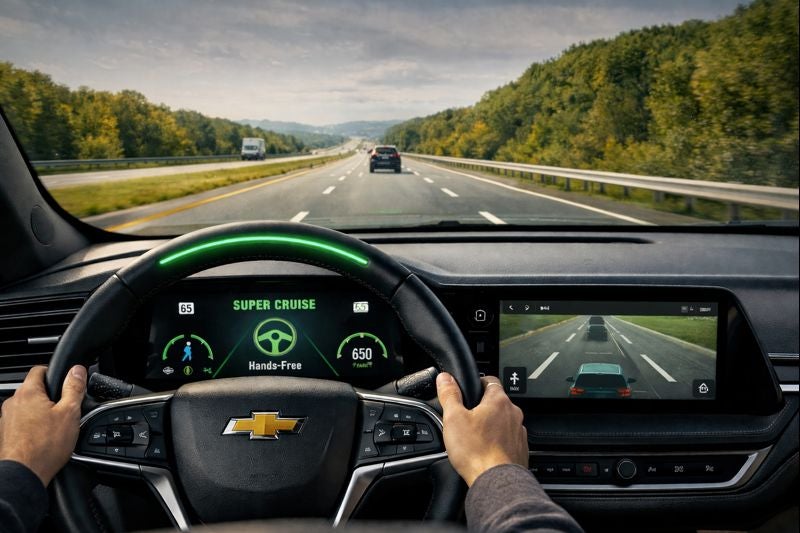
Chevrolet Super Cruise is a hands free driver assistance system designed to reduce driver workload during highway driving while keeping the driver fully responsible for the vehicle. It is not self driving and it is not autonomous. Instead, Super Cruise uses a tightly controlled combination of mapping data, vehicle sensors, and driver attention monitoring to allow hands free steering on specific highways when all operating conditions are met. Understanding Super Cruise requires separating marketing shorthand from real system behavior. This technology is engineered around safety validation, redundancy, and driver accountability rather than independence from the driver. What Chevrolet Super Cruise Actually Is Super Cruise is classified as a Level 2 driver assistance system. This classification means the vehicle can assist with steering, acceleration, and braking simultaneously, but the driver must remain attentive and ready to take control at all times. Key characteristics of Level 2 driver assistance include: more Hands free steering capability under defined conditions Continuous driver monitoring No independent decision making outside the programmed environment Immediate driver takeover required when system limits are reached Super Cruise differs from basic lane keep assist systems because it provides continuous steering control rather than intermittent corrections. However, that capability only exists when the system can confirm road type, vehicle position, and driver attention simultaneously. How Super Cruise Works at a System Level Super Cruise relies on a layered system architecture. Each layer must independently validate safe operation before hands free steering is allowed. Core system components include: LiDAR based high definition road maps GPS positioning with lane level precision Forward facing cameras for lane tracking Radar sensors for distance and speed monitoring An infrared driver attention camera Vehicle control modules managing steering, braking, and throttle If any one of these components cannot confirm proper conditions, Super Cruise disengages and returns control to the driver. Why LiDAR Mapped Roads Are Required One of the most important distinctions of Super Cruise is its reliance on pre mapped highways. General Motors uses LiDAR scanning to create highly detailed three dimensional maps of approved divided highways. These maps allow the system to: Confirm exact lane geometry Anticipate curves and elevation changes Validate road boundaries beyond camera visibility Maintain accuracy when lane markings are faded or inconsistent Super Cruise will not activate on city streets, two lane roads, or unmapped highways because those environments introduce variables that cannot be reliably validated for hands free steering. Driver Attention Monitoring and Enforcement Hands free does not mean eyes free. Super Cruise uses an infrared camera mounted on the steering column to track head position and eye movement in real time. The system verifies that the driver is: Facing forward Visually engaged with the road Alert and responsive If driver attention drops, the system escalates warnings in stages: Visual alerts through the steering wheel light bar Audible alerts Seat vibration Eventual system disengagement if ignored If the driver does not respond, Super Cruise will slow the vehicle and bring it to a controlled stop while activating hazard lights. This enforcement process is a critical safety element and a key differentiator from systems that rely only on steering wheel input. When Hands Free Steering Is Allowed Super Cruise activates only when all required conditions are satisfied: The vehicle is traveling on a compatible divided highway Lane geometry and road data are confirmed Camera visibility is sufficient The driver attention system confirms engagement No system faults are present When active, the steering wheel light bar turns green, indicating hands free steering is permitted. If conditions change, the system immediately alerts the driver and requires hands on control. Is Super Cruise Fully Autonomous No. Super Cruise is not autonomous driving. It cannot: Navigate city intersections Respond to traffic signals Handle construction zones independently Make route decisions Replace driver responsibility The system is designed specifically for controlled highway environments, where predictable road geometry allows assistance without removing the driver from the control loop. Subscription and Ownership Considerations Most Chevrolet vehicles equipped with Super Cruise include a limited trial period. Continued use after that period typically requires a subscription. Important ownership considerations include: The hardware remains installed in the vehicle Functionality is enabled through software Subscription status determines feature availability Shoppers evaluating Super Cruise should factor long term access into ownership planning rather than assuming permanent availability. Super Cruise Compared to Other Hands Free Systems Super Cruise is often compared to Tesla Autopilot, but the systems differ significantly in design philosophy. Key distinctions include: Super Cruise operates only on pre mapped highways Tesla systems rely more heavily on vision based interpretation Super Cruise enforces driver attention using eye tracking Tesla primarily monitors steering wheel input These differences reflect General Motors’ focus on controlled environments and active safety enforcement rather than broad autonomy claims. Who Super Cruise Is Designed For Super Cruise is best suited for drivers who: Spend significant time on interstate highways Want reduced steering workload during long trips Prefer clearly defined system boundaries Value enforced driver engagement for safety It is not intended for drivers expecting hands free operation in urban or unpredictable environments. The Broader Role of Super Cruise in Chevrolet Technology Super Cruise represents Chevrolet’s approach to driver assistance as a support system rather than a replacement for the driver. By limiting operation to environments where safety can be validated and enforcing continuous attention, the system prioritizes fatigue reduction without compromising responsibility. For shoppers evaluating advanced driver assistance features, the most important factors are where the system works, how it monitors safety, and what role the driver continues to play. Super Cruise is most effective when understood and used within those boundaries.

Chevrolet AWD vs 4WD: Which System Handles Wisconsin Winter Roads Better

Wisconsin winter driving exposes the difference between marketing labels and real mechanical function. Snow covered highways, glare ice at intersections, slush buildup, and frequent freeze thaw cycles demand drivetrains that manage traction predictably, not just aggressively. Chevrolet offers both all wheel drive and four wheel drive systems across its lineup, but they are engineered for different winter realities. Understanding how each system behaves in real conditions is the key to choosing the right setup. This comparison focuses on system design, driver involvement, and real winter performance rather than vehicle models or trim levels. The Core Mechanical Difference Between AWD and 4WD The primary distinction between AWD and 4WD is how torque is distributed and how the system is engaged. All wheel drive systems are designed to operate automatically: Power is distributed between front and rear axles as needed Engagement happens without driver input Torque adjustments occur continuously and instantly Systems are optimized for mixed traction environments Four wheel drive systems are designed for severe traction loss: Driver manually engages 4WD Front and rear axles are mechanically linked Torque is split evenly, regardless of surface grip Systems prioritize maximum traction over precision control This fundamental difference determines how each system performs on Wisconsin roads, where surface conditions can change mile by mile. How Chevrolet AWD Systems Handle Winter Conditions Chevrolet AWD systems are engineered for on road winter driving where ice, packed snow, and slush are more common than deep powder. Key AWD characteristics include: Reactive torque transfer when wheel slip is detected Seamless integration with traction control and stability control Improved stability during cornering on icy pavement No risk of drivetrain binding on dry or partially dry roads In Wisconsin winters, where roads are often plowed but still slippery, AWD excels because it continuously adapts without driver intervention. The system supports smooth acceleration at intersections, controlled lane changes, and stable highway travel in variable conditions. AWD is especially effective during: Icy mornings and evening refreeze Slushy highways with inconsistent traction Light to moderate snowfall on paved roads Urban and suburban winter commuting How Chevrolet 4WD Systems Perform in Snow and Ice Chevrolet 4WD systems are built for conditions where traction loss is extreme and persistent. Key 4WD characteristics include: Mechanical locking of front and rear axles High torque delivery to all four wheels Superior performance in deep snow and unplowed areas Increased traction at low speeds However, 4WD systems are not designed for continuous use on mixed surfaces. When engaged on ice or partially cleared roads, the locked drivetrain can reduce steering precision and increase understeer. 4WD performs best in: Deep snow accumulation Rural or unplowed roads Driveways, hills, and off pavement conditions Low speed travel where traction is limited everywhere Improper use of 4WD on icy pavement is one of the most common winter driving mistakes, especially when drivers assume it improves braking or cornering control. Braking and Stopping Distance Reality A critical winter driving misconception is that AWD or 4WD improves braking. In reality: Drivetrains do not shorten stopping distance Braking performance is controlled by tire grip and ABS Vehicle weight increases stopping distance on ice Stability control manages direction, not stopping power Both AWD and 4WD vehicles rely on the same braking systems. This means a heavier 4WD truck may actually require more distance to stop on ice than a lighter AWD crossover, even with more driven wheels. Driver Input and Error Risk Another major difference between AWD and 4WD is the role of the driver. AWD minimizes driver decision making: No need to anticipate traction loss No engagement errors System responds faster than human input Ideal for unpredictable winter conditions 4WD requires active decision making: Driver must choose when to engage or disengage Incorrect use can reduce control Engagement at the wrong time can stress drivetrain components Requires greater winter driving awareness For many Wisconsin drivers, especially those who travel on mixed surfaces, AWD reduces the risk of human error during winter driving. Ice vs Snow Performance Comparison Wisconsin winters are dominated by ice more than deep snow, especially on main roads. On ice: AWD offers better balance and control Stability systems work more effectively Steering response remains predictable 4WD offers limited advantage In deep snow: 4WD provides superior forward traction Ground clearance becomes critical AWD may struggle once snow depth exceeds clearance Low speed traction favors 4WD This distinction explains why AWD is often better suited for most winter driving scenarios, while 4WD remains valuable for specific environments. The Role of Tires in Both Systems No drivetrain can compensate for inadequate tires. Winter capable tires provide: Softer rubber compounds for cold temperatures Improved ice braking performance Better steering feedback on snow Reduced reliance on electronic intervention AWD paired with proper winter tires often outperforms 4WD vehicles on all season tires in real winter conditions. Which System Is Better for Wisconsin Winter Roads The answer depends on where and how you drive. AWD is generally better for: Daily commuting Highway travel Mixed winter conditions Drivers who want automatic traction management 4WD is better for: Rural or unplowed roads Deep snow environments Low speed winter work conditions Drivers comfortable managing drivetrain settings Final Winter Driving Perspective Chevrolet AWD and 4WD systems are engineered for different winter challenges. AWD prioritizes stability, adaptability, and ease of use on icy and inconsistent roads. 4WD prioritizes raw traction in deep snow and severe conditions but requires disciplined driver input. Understanding these differences allows Wisconsin drivers to choose the system that aligns with their real world winter driving environment rather than assumptions about capability.

Best Chevy Vehicles for Winter Driving in Wisconsin

Wisconsin winters are not a single condition. They are a rotating mix of packed snow, glare ice, slush, refreeze cycles, subzero temperatures, and unevenly cleared roads. Choosing the right Chevrolet for these conditions requires understanding how winter driving systems actually work, not just which badge is on the tailgate. Drivetrain layout, electronic control systems, ground clearance, tire behavior, and vehicle weight all play measurable roles in winter performance. Below is a system focused breakdown of what matters most and which Chevy vehicles are best suited for Wisconsin winter driving. What Actually Matters for Winter Driving Performance Before comparing vehicles, it helps to clarify what winter capability really means. Winter traction is controlled by several interacting systems: Tire compound and tread design, which determine grip in cold temperatures Drivetrain layout, which affects how torque is delivered during acceleration Stability and traction control systems, which manage wheel slip and vehicle balance Ground clearance, which determines whether the vehicle can move through deep or drifting snow Weight distribution, which affects braking stability and cornering control No single system works alone. Winter confidence comes from how these components work together. more AWD vs 4WD in Snow and Ice Many shoppers assume 4WD is always superior to AWD in winter, but that is not always true. All wheel drive systems, used on many Chevy SUVs and crossovers, are designed for continuous traction management: Power is automatically distributed between front and rear wheels Systems respond instantly to wheel slip No driver input is required to engage traction support Ideal for icy roads, slush, and variable conditions Four wheel drive systems, used on trucks like Silverado and Tahoe, are built for severe conditions: Typically driver selectable Best for deep snow, unplowed roads, and low speed traction Less ideal for mixed pavement and ice when engaged improperly For most Wisconsin drivers who spend time on plowed roads with intermittent snow and ice, modern Chevy AWD systems provide more consistent control. Chevrolet Traction and Stability Systems Explained Chevrolet vehicles rely heavily on electronic control systems to manage winter conditions. Key systems include: Traction Control, which limits wheel spin during acceleration Electronic Stability Control, which applies braking to individual wheels to maintain directional control Electronic Brake Force Distribution, which adjusts braking pressure based on traction Drive Mode Select systems, which alter throttle response and traction thresholds in snow modes These systems do not increase grip. Instead, they manage available grip more efficiently, reducing loss of control during acceleration, braking, and cornering. In icy conditions, this electronic intervention is often the difference between controlled movement and a slide. Why Tires Matter More Than Drivetrain Alone Even the best AWD system cannot overcome poor tire performance. Cold temperatures harden standard all season tires, reducing traction even on dry pavement. Winter rated tires remain flexible in freezing conditions and significantly improve: Braking distance on ice and snow Steering response during cornering Stability during sudden maneuvers Wisconsin drivers who pair AWD or 4WD Chevys with winter capable tires see dramatically better real world winter performance than drivetrain alone. Best Chevy SUVs for Wisconsin Winter Driving Chevy SUVs offer a strong balance of traction systems, ride height, and winter focused technology. Chevrolet Equinox AWD AWD system optimized for on road winter conditions Lower center of gravity improves ice handling Lighter weight aids braking control Excellent choice for daily commuting and urban driving Chevrolet Blazer AWD Advanced AWD with torque vectoring capability Strong stability control tuning Wider stance improves cornering stability on ice Well suited for highway winter travel Chevrolet Traverse AWD Larger platform with intelligent AWD engagement Higher ground clearance for snow accumulation Stable braking performance due to longer wheelbase Ideal for families traveling in winter conditions Chevrolet Tahoe and Suburban 4WD Full size platforms with selectable 4WD Excellent for rural roads and unplowed conditions High ground clearance handles deep snow Heavier weight requires careful braking technique on ice Chevy Trucks and Severe Winter Use For drivers in rural Wisconsin or areas with limited snow removal, Chevy trucks provide unmatched capability. Chevrolet Silverado 4WD Robust part time 4WD system High torque delivery for deep snow traction Snow mode integration improves throttle control Best paired with proper winter or all terrain tires Trucks excel when snow depth and terrain variability increase, but they require disciplined use of 4WD to avoid reduced steering control on ice. SUV vs Car in Wisconsin Winters SUVs are not automatically safer in winter, but they offer advantages: Higher ground clearance prevents snow buildup under the vehicle AWD availability across more models Better visibility in snow conditions Chevy sedans with front wheel drive can perform well in winter with proper tires, but deep snow and rural conditions favor SUVs. What Wisconsin Drivers Should Prioritize When choosing a Chevy for winter driving, focus on: AWD or 4WD based on road conditions, not marketing Stability control and traction systems as standard equipment Tire quality and winter compound availability Ground clearance appropriate for snow accumulation levels Vehicle weight balance and braking confidence Chevrolet’s lineup offers winter capable options across SUVs and trucks, but the best choice depends on how and where you drive during Wisconsin’s harshest months. Final Ownership Perspective Winter driving confidence is built through system interaction, not a single feature. Chevrolet’s modern AWD, traction management, and stability systems are engineered to support real world winter driving when paired with proper tires and informed use. Understanding how these systems work allows Wisconsin drivers to choose vehicles that deliver consistent control, predictable handling, and confidence through the most demanding months of the year.

2025 Chevy Tahoe Size MPG and What Drivers Should Know This Year

The 2025 Chevrolet Tahoe is a full size SUV engineered for drivers who need real passenger space, towing strength, and long term durability. Its capability comes from concrete engineering choices including body on frame construction, multiple powertrain options, and a trim lineup that changes both function and equipment. Understanding these details helps set accurate expectations for fuel economy, performance, and ownership. Full Size Dimensions and Platform Design The Tahoe is built on a body on frame platform shared with Chevrolet full size trucks. This design supports higher towing loads and long term structural durability compared to unibody SUVs. Key exterior and interior measurements include: Wheelbase approximately 120.9 inches Overall length approximately 210.7 inches Width approximately 81 inches without mirrors Interior cargo capacity reflects true full size usability: About 25.5 cubic feet behind the third row About 72.6 cubic feet with the third row folded Up to approximately 122.9 cubic feet with second and third rows folded These dimensions allow the Tahoe to carry passengers and cargo simultaneously without forcing tradeoffs. Engine Options and Power Output Chevrolet offers three distinct engines in the 2025 Tahoe, each designed for a different type of driver. 5.3 liter V8 gasoline engine Approximately 355 horsepower Approximately 383 pound feet of torque Standard engine on LS, LT, RST, Z71, and Premier trims Focuses on balanced power, everyday drivability, and towing capability 6.2 liter V8 gasoline engine Approximately 420 horsepower Approximately 460 pound feet of torque Available on RST, Premier, and High Country trims Designed for stronger acceleration, higher towing confidence, and performance oriented driving 3.0 liter Duramax turbo diesel Approximately 277 horsepower Approximately 460 pound feet of torque Available on most trims Emphasizes low end torque, highway efficiency, and sustained towing performance All engines are paired with a ten speed automatic transmission that adjusts gear spacing to maintain power delivery while improving efficiency. Real MPG Numbers by Engine Fuel economy varies by drivetrain and engine choice. EPA estimates provide a consistent comparison baseline. 5.3 liter V8 Rear wheel drive approximately 15 city and 20 highway Four wheel drive approximately 14 city and 19 highway 6.2 liter V8 Rear wheel drive approximately 14 city and 20 highway Four wheel drive slightly lower depending on configuration 3.0 liter Duramax diesel Rear wheel drive approximately 21 city and 28 highway Four wheel drive approximately 20 city and 26 highway Real world MPG will vary based on driving habits, terrain, passenger load, and towing use, but the diesel option consistently delivers the strongest efficiency for highway focused drivers. Trim Levels and What Changes Between Them The 2025 Tahoe trim lineup is structured to scale from functional to premium without changing the underlying platform. LS Entry trim focused on value and space Standard 5.3 liter V8 Ideal for fleet, family transport, or budget conscious buyers LT Adds comfort and technology upgrades Available leather seating and advanced driver assistance Maintains focus on everyday usability RST Sport oriented appearance Available 6.2 liter V8 Larger wheels and performance focused styling Z71 Off road focused configuration Four wheel drive standard Skid plates, off road suspension tuning, and all terrain tires Premier Luxury oriented without sacrificing capability Advanced trailering technology Available magnetic ride control High Country Top tier trim Standard 6.2 liter V8 Maximum technology, towing features, and interior refinement Towing Capability and Stability Systems When properly equipped, the Tahoe can tow up to approximately 8,400 pounds depending on engine and drivetrain configuration. Trailering technology includes trailer sway control, integrated brake controller availability, hitch guidance systems, and cooling upgrades that support sustained towing loads. The body on frame construction and longer wheelbase contribute to stability when towing at highway speeds. Longevity and Ownership Expectations The Tahoe’s design prioritizes durability. The combination of a proven V8 engine lineup, heavy duty transmission, and truck based chassis supports long service life when properly maintained. Routine maintenance including oil changes, transmission service, brake inspections, and cooling system care has a direct impact on longevity. Many Tahoe owners drive well into high mileage ranges while retaining reliability. What Drivers Should Know Before Choosing a Tahoe The Tahoe is not built to compete with midsize SUVs on fuel economy or parking convenience. It is built for drivers who need space, power, and confidence across years of ownership. Understanding the engine options, MPG realities, and trim differences ensures buyers choose the right configuration from the start. At Koehne Chevrolet, our team helps drivers compare Tahoe trims, engines, and drivetrains based on real usage rather than surface level specs. If you are evaluating the 2025 Chevy Tahoe, we are here to help you choose the configuration that fits your needs with clarity and confidence.

Chevrolet AWD vs. 4WD What’s the Difference and Which Fits Your Drive

All wheel drive and four wheel drive are often grouped together, but they are engineered for different traction problems. Chevrolet uses each system intentionally across its lineup based on vehicle type, drivetrain architecture, and real world use. Understanding how power is delivered and when each system is designed to engage is the key to choosing the right setup for your driving conditions. How All Wheel Drive Systems Work All wheel drive systems are designed to manage traction automatically during normal driving. In Chevrolet vehicles equipped with AWD, power is primarily sent to the front wheels under standard conditions to maximize efficiency. When wheel slip is detected, the system uses electronically controlled clutches and sensors to redistribute torque to the rear wheels. This process happens continuously and without driver input. Wheel speed sensors, throttle position, steering angle, and road speed all feed into the system to determine how much torque is needed at each axle. The goal is stability and control on paved surfaces, especially in rain, light snow, or variable traction conditions. AWD systems are optimized for on road use. They are not intended for extreme terrain but excel at maintaining grip during everyday driving where traction can change quickly. How Four Wheel Drive Systems Differ Four wheel drive systems are built for higher load and lower traction environments. In Chevrolet trucks and body on frame SUVs, 4WD systems use a transfer case to mechanically distribute power to both the front and rear axles. Most modern Chevrolet 4WD systems offer multiple drive modes, including two wheel drive for normal pavement driving and selectable four wheel drive modes for low traction situations. Some configurations also include a low range gear set, which multiplies torque at low speeds. This is critical for deep snow, mud, steep grades, or off road conditions where controlled power delivery matters more than speed. Because 4WD systems rely on mechanical engagement rather than continuous electronic modulation, they are better suited for sustained traction demands and heavier loads. AWD vs 4WD in Winter Conditions In winter driving, the difference comes down to traction consistency versus traction strength. AWD provides constant monitoring and adjustment, which helps maintain stability on icy roads, slush, and changing pavement conditions. It is especially effective for drivers who spend most of their time on plowed roads but want added confidence when traction is unpredictable. 4WD becomes more effective when snow depth increases or when traction is consistently poor. Engaging four wheel drive locks power distribution more evenly across axles, which helps prevent wheel spin when climbing hills, pulling away from deep snow, or driving on unmaintained roads. Impact on Fuel Economy and Daily Driving AWD systems are designed to disengage when additional traction is not needed. This reduces drivetrain drag and helps preserve fuel efficiency during normal driving. Because AWD vehicles are typically built on lighter platforms, they also tend to feel more responsive and easier to maneuver in daily traffic. 4WD systems are heavier and more robust. The added drivetrain components increase weight and mechanical resistance, which can affect fuel economy. For drivers who do not regularly encounter demanding conditions, this can be more capability than necessary. Chevy AWD and 4WD Applications Across the Lineup Chevrolet applies AWD primarily to crossover and SUV platforms where comfort, stability, and efficiency are priorities. These systems support confident year round driving without requiring driver intervention. 4WD is reserved for Chevrolet trucks and select SUVs that are engineered for towing, hauling, and off road capability. These vehicles use reinforced frames, heavier duty axles, and cooling systems designed to handle the added stress that comes with sustained traction demands. Choosing the Right Drivetrain for Your Needs The right drivetrain depends on how traction is lost in your daily driving. If traction loss is occasional and happens at speed on paved roads, AWD is typically the better solution. If traction loss is severe, sustained, or combined with heavy loads, 4WD provides the mechanical strength needed to maintain control. Understanding this distinction helps drivers choose a vehicle that matches their environment without paying for capability they will rarely use. At Koehne Chevrolet, our team helps drivers compare Chevrolet AWD and 4WD systems based on real driving conditions, vehicle use, and long term ownership needs. If you want help determining which drivetrain fits your drive, our team is ready to walk through the options with clarity and confidence.

2025-Chevy-Silverado-1500-Marinette-WI

Rugged Dependability in the 2025 Chevy Silverado 1500

When you want rugged and dependable, you want the 2025 Chevy Silverado 1500. There are so many options on this truck that you can truly make it whatever you want it to be. It's a great truck for taking the family around, but it can also go off-road or to the worksite. Here's why you can count on it. more All That Power You get four engines to choose from: the 2.7L, four-cylinder one that comes on the base trim, a 3.0L diesel six-cylinder, and then two more gas options: a 5.3L and a 6.2L. With the base engine, you get 310 hp and 430 lb-ft of torque. The two bigger gas engines go up first to 355 hp and then to 420, and the torque goes first to 383 lb-ft and then up to 460. With the diesel, your torque is a whopping 495 lb-ft, and, not surprisingly, you can pull the largest loads with engine: towing capacity is 13,300 lbs. With the gas engines, you can pull up to 9,500 lbs on the base trim engine, as much as 11,300 lbs with that 5.3L, and 13,200 lbs with the biggest one. So Many Bed Choices You can outfit your Silverado to match your needs. The shortest bed is 5.8 feet long, and the next, mid-length bed comes in at six feet. The extended bed is about eight feet long, and all three are made from the same high-strength, roll-formed steel. Any bed can be made yours with various options like a camera, LED lighting, or a cargo organizer. The sides of the cargo bed are also higher on the Silverado than on trucks of similar size from other marques, so that means you actually end up with more cargo space. Any bed can be equipped with the Multi-Flex tailgate if you like, which gives you a number of extra features, like a step and a flat space to use a laptop or do paperwork. An Interior That Can Do It All What do you want in your truck? If you want no bells or whistles, something easy to clean and functional, then the WT trim gives you all the basics you need. The front seats and locks are all manual, meaning there's nothing really to break, and you get vinyl upholstery that's ready for dirt and mud and easy to clean. It still comes with a 7" touchscreen and can play seamlessly with Apple and Android phones. Go up to higher trims to get cloth seats, power adjustability on the seats, rear USB ports, heated seats, wood accents, premium leather and premium sound system, and a larger 13.4-in touchscreen. Test drive a Silverado today to learn more. Visit us at Koehne Chevrolet GMC in Marinette, WI to get started.

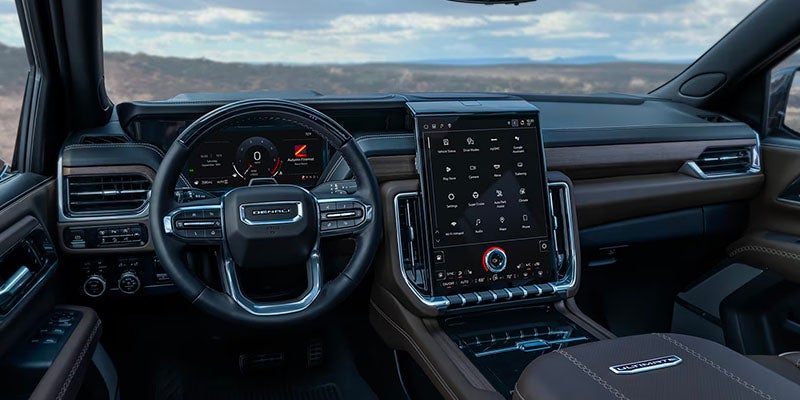
Modern 2025 GMC Yukon interior showing a steering wheel and large touchscreen dashboard.

5 Strong Points of the 2025 GMC Yukon

With seating for up to eight passengers, the 2025 GMC Yukon is a family-friendly SUV with a comfortable three-row cabin, and advanced driver-assist and entertainment features. more 1. Powerful and Fuel-Savvy Performance The 2025 Yukon has three engines available among its trim lineup, starting with a 5.3-liter V8 that delivers 355 horsepower and serves as the vehicle's base engine. Another V8, a 6.2-liter, provides the most output with its 420 horses, though the most fuel-efficient engine in the lineup is easily the 305-horsepower turbocharged diesel I6, which gets up to 24 MPG in combined city/highway mileage. Regardless of which engine you go with, all pair with a quiet-shifting 10-speed automatic transmission. 2. Premium 16.8-inch GMC Infotainment This edition's infotainment system has a full-color 16.8-inch touchscreen display and comes with Google Built-In, a wide range of Google services and programs. With this system, you can ask Google Assistant to make hands-free calls, get directions to destinations with Google Maps, stream audio and video from smartphones wirelessly, and set up personalized profiles for different users. This system also lets you adjust interior climate settings and view on-screen visuals around the vehicle with any of the many camera systems offered. 3. A Convenient In-Cabin Wi-Fi Hotspot The vehicle's built-in 5G Wi-Fi hotspot can be accessed with an internet data plan and provides blazing fast connection speeds for up to 10 devices. Unlike phone hotspots, this one uses a roof-mounted antenna that offers stronger reception. The modem can also automatically reconnect to familiar devices that have previously connected to it, saving you time from having to enter a log-in password each time, and the data plans offered can be paused when you're not traveling to help you save data when not in use. 4. The Intelligent Active Response 4WD Also versatile in different scenarios, this edition offers available Active Response 4WD, a capable 4x4 system that automatically calibrates itself to terrain changes and comes paired with an electronic limited-slip differential for enhanced traction. This system can be combined with many other versatility-enhancing options, like the Air Ride Adaptive Suspension that lets you adjust the vehicle's height to increase ground clearance and Magnetic Ride Control, which helps provide smoother rides. 5. Hands-Free Driving with Super Cruise The available Super Cruise hands-free system lets you relax a bit while cruising compatible highways, as it can take over many driving responsibilities and monitors your eye movements to ensure you're always paying attention. Not only does this system control acceleration and braking to help you maintain your preferred speed while avoiding other vehicles, but it also performs hands-free lane changes. Best of all, it can be used while trailering and automatically adjusts performance based on your trailer's weight. Ready to see more than just these five highlights? Contact us today at Koehne Chevrolet GMC in Marinette, WI to come test-drive the 2025 Yukon.

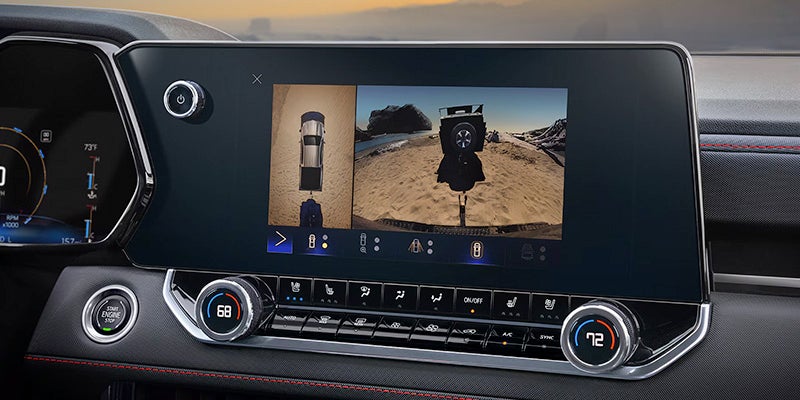
2025 Chevrolet Colorado dashboard display showing a 3D view of a vehicle on a beach and control buttons.

4 Capable Highlights of the 2025 Chevrolet Colorado

The 2025 Chevy Colorado is an iconic mid-size truck with all the dependability you need for work or pleasure. Check out the top four highlights of the Colorado below and find out where there's a Chevy dealership near you for a test drive. more 1. TurboMax Engine When you want a truck with lots of power, the Chevy Colorado delivers with its TurboMax engine and 8-speed automatic transmission. These give you a total of up to 310 horsepower at 5600 RPMs and 430 lb-ft. of torque at 3,000 RPMs. You also get a heavy-duty 800 cold-cranking amps battery with retained accessory power and rundown protection. 2. Adept Exterior Features The outside of the Colorado provides plenty of attractive and capable features, such as: 17-inch metallic silver steel wheels Remote locking tailgate Automatic on/off headlamps Halogen daytime running lamps IntelliBeam auto high beams Privacy glass and deep-tinted glass Solar-absorbing windshield Additional features that come standard with the Chevy Colorado's base trim include heated power-adjustable outside mirrors, a CornerStep rear bumper, and convenient cab-mounted cargo area lamps. There are also lots of available features to maximize your truck's utility, like off-road assist steps, cargo tie-down rings, and an EZ-Lift and Lower tailgate. 3. Elite Infotainment Infotainment and connectivity features inside the Colorado are in a class of their own, beginning with the 11.3-inch advanced color LCD display with Google Built-In. The driver gets an 11-inch color information center that displays key gauges like speed, fuel level, and mileage, and everyone gets access to wireless Android Auto and Apple CarPlay capability. Wi-Fi hotspot capability is also standard, along with OnStar services capability and two easy-to-use front USB ports for charging and data. 4. Top-Ranking Safety The Chevy Colorado also comes with ample safety features to give you more peace of mind on your drives, like: LED reflective windshield collision alert Lane keep assist with lane departure warning Forward collision alert Rear park assist Rear cross-traffic braking Following distance indicator Hitch view and HD rear vision camera Other standard safety features include blind zone steering assist, front pedestrian and bicyclist braking, and a StabiliTrak brand electronic stability control system. If you want additional features, you can always upgrade to the available blind zone steering assist with trailering or the highway safety kit. The latter includes jumper cables, bungee cords, gloves, tape, and tools to have on hand in case of an emergency. Take the Chevy Colorado for a test drive today by contacting us at Koehne Chevrolet GMC in Marinette, WI. We're located at W1760 Hwy 41 and are open Monday through Friday from 8:30 a.m. to 6:00 p.m. and on Saturday from 8:30 a.m. to 2:00 p.m.

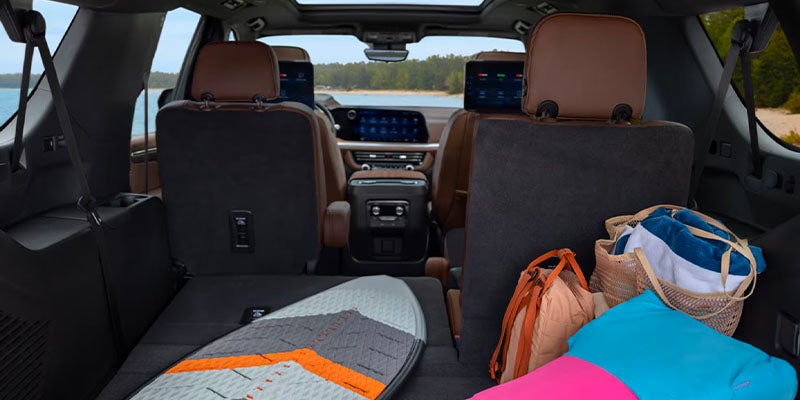
The back of an 2025 Chevy Suburban SUV showing a surfboard, colorful bags, and screens in front seats.

5 Key Features of the 2025 Chevrolet Suburban

When temperatures plunge and your to-do list grows, comfort matters. With cold-weather features, a quiet ride, impressive towing capabilities, and straightforward tech, the 2025 Chevy Suburban turns morning chaos into calm before you even pull onto the highway. more Room for Everyone & Everything The Suburban's long wheelbase translates into adult-friendly space and a massive cargo area. You'll find a 41.5 cubic feet dedicated cargo area behind the third row, and a standard cargo management system helps keep it organized. If you're carrying larger loads or longer items, you can fold some or all of the split-folding rear seats down. With all rear seats folded, there's a cavernous 144.5 cubic feet available for carrying camping equipment, sports gear, grocery hauls, and furniture. In its standard layout, the Suburban carries up to eight, but the LS can carry nine with the available front bench seat. With 44.5 inches of legroom in the front, 42 inches in the second row, and 36.7 inches in the third, even taller passengers have room to stretch out. Power That Feels Effortless The Suburban offers a choice of robust engines paired with a smooth-shifting 10-speed automatic transmission. Whether you opt for the standard 355-horsepower 5.3L V8 or you upgrade to the available 6.2L V8 or the 3.0L Duramax turbo-diesel engine, you'll get strong passing power and the muscle to tow. Rear-wheel drive comes standard, but four-wheel drive adds surefooted traction for Marinette winters. Trailering Tech Made Easy Whether you're towing a boat to Green Bay or a camper toward Door County, the Suburban's trailering features help you do it with less stress. Trailer sway control, hitch guidance, and trailering equipment come standard, but available upgrades help maximize your power. For a maximum towing capacity of 8,400 pounds, add the available Max Trailering package to the standard 5.3L V8 engine. Comfort for 4 Seasons A quiet cabin and thoughtful touches help the miles fly by. Remote start lets you get your vehicle comfortably warmed up before you load your family, and tri-zone automatic climate control maintains your ideal temperature year-round. Higher trims add heated front seats and a heated steering wheel to take the chill off of winter mornings. Infotainment That's Easy to Use Front and center is a stunning 17.7-inch infotainment display with Google built-in that supports wireless Apple CarPlay and Android Auto. A crisp 11-inch driver information center keeps essential data in your line of sight. When you're road-tripping, you'll appreciate USB ports across all rows, available wireless charging, and Wi-Fi hotspot capability. The Suburban delivers maximum space without sacrificing comfort, power, or tech. Come to Koehne Chevrolet GMC in Marinette, WI to see it in person and take a test drive.

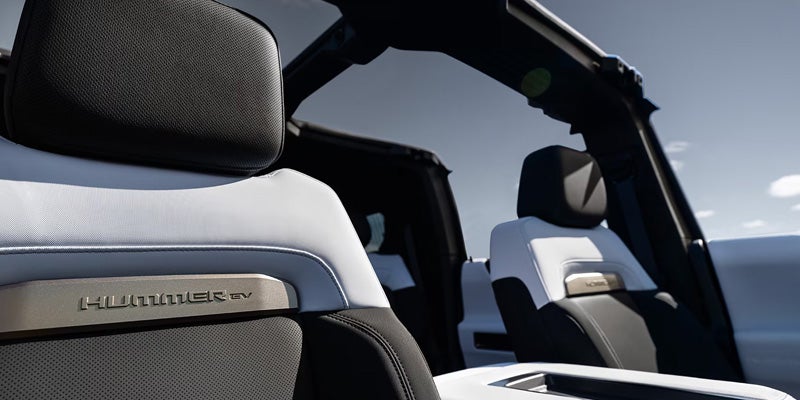
Interior seats of a 2025 GMC HUMMER EV SUV, featuring black and white leather with Hummer EV branding.

Electric Capability Refined: The 2025 GMC HUMMER EV SUV

The 2025 GMC HUMMER EV SUV is an all-electric powerhouse of a vehicle with capabilities that leave other SUVs literally trailing dust. As your GMC dealer, we're going to take you on a closer look at some of its available cutting-edge abilities. more Outstanding Available Capabilities of the 2025 GMC HUMMER EV SUV Watts to Freedom Blistering acceleration takes on a whole new meaning when you activate this available function on your 3x HUMMER EV on a closed track. Watts to Freedom is activated by bringing your HUMMER to a stop, then pressing the traction control button on your dashboard two times. A message will appear on the screen asking you to confirm, then press the button on the right side of your steering wheel. You'll feel your HUMMER lower itself like an Olympic athlete preparing to sprint. Once in position, the Watts for Freedom logo will illuminate. Straighten your steering wheel, press the brake pedal down, then press the accelerator pedal to the floor, and you're ready to go. As soon as you release the brake pedal, your HUMMER launches itself forward, reaching 0 to 60 mph in 3.5 seconds! It's a rush you have to experience. CrabWalk The available revolutionary CrabWalk mode allows you to defeat obstacles and go where other off-road vehicles can't. You select it by coming to a complete stop, centering your steering wheel, then pressing and holding the 4-Wheel Steer button on your Drive Mode Control for four seconds.  The orange CrabWalk icon will appear on your screen, and you can now move diagonally. In this mode, your rear wheels can move up to 10 degrees to either side, mirroring the movement of the front wheels. This allows you to maneuver between obstacles, like boulders. You can also use CrabWalk to enter or exit tricky parking spaces. Once active, you can deactivate it by pressing the 4-Wheel Steer button once, by pressing the CrabWalk icon on your touchscreen, or by exceeding 20 mph, which causes it to deactivate automatically. Home Backup Power Blackouts can happen unexpectedly for many reasons. They're a nuisance if they last a few minutes, but an extended power outage is very stressful. We depend so much on electricity that it's almost impossible for your home to function without it. If this happens, your HUMMER can come to the rescue using its powerful Ultium battery to keep the power on. The HUMMER does this using the available GM Energy PowerShift Charger, which allows power to flow into or out of your vehicle as needed. When you add the GM Energy Enablement kit, your HUMMER can power your house for several days until electricity is restored. Learn even more about the HUMMER's capabilities by contacting us at Koehne Chevrolet GMC in Marinette, WI.

Close-up of a black 2025 GMC Terrain with the 'Terrain' logo and a Continental tire in the background.

Flexible Style in the 2025 GMC Terrain

Shopping for a stylish SUV that you can use for work, play, and everything in between? If so, you'll love the new 2025 GMC Terrain. This SUV has a new look, advanced tech features, and everything you need for a safe, connected, and fun driving experience. more The Stylish Options The new GMC Terrain comes in a single trim, the Elevation, but drivers can elevate their vehicle by opting for the Black Edition version. The Black Edition gives the vehicle 19-inch gloss black wheels, black mirror caps, black roof-mounted side rails, black exterior accents, black badging, red GMC lettering, and a dark front grille. The Effortless Good Looks The new GMC Terrain Elevation is available in six exterior color options. It has striking LED headlamps and tail lamps, an available panoramic sunroof, 17-inch aluminum wheels, an available autosense power liftgate, and a two-tone roof. It also features an upright grille, which gives it an aggressive stance and a distinctive look. The Confidence-Boosting Safety System This SUV will keep you safe on and off the road and make you feel more confident in all types of driving conditions. It has over 15 driver assistance technologies, including a forward collision alert system, a high-definition rear vision camera, a following distance indicator, blind zone steering assist, front pedestrian and bicyclist braking, safety alert seats, adaptive cruise control, reverse automatic braking, and more. The Tech Features The new GMC Terrain has advanced tech features to keep you connected, including a 15-inch diagonal premium GMC infotainment system where you can access vehicle settings, controls, audio, maps, Amazon Alexa, Google Assistant, climate control, a Wi-Fi hotspot, and more. It also has an 11-inch diagonal driver information center right behind the steering wheel and up to eight total available camera views. Drivers will love the Google built-in compatibility, wireless Android Auto and Apple CarPlay compatibility, and connectivity features that make staying connected easier than ever. The Interior The new GMC Terrain is outfitted with premium details that make life on the road more accommodating and enjoyable. It has heated front seats, a heated steering wheel, 60/40 split folding rear seats, and a comfortable, spacious interior. The Capabilities The new GMC Terrain has engine power that won't disappoint. It has a 1.5L turbo four-cylinder engine with a continuously variable transmission on the FWD model and an eight-speed automatic transmission on the AWD model. It's also an off-road-ready vehicle with available all-wheel drive that features hill descent control to make you feel more comfortable tackling difficult terrain. The new GMC Terrain is perfect for drivers looking for an SUV with space, style, and sophistication. We can answer all your questions about this powerful and capable SUV and schedule your test drive. Contact Koehne Chevrolet GMC in Marinette, WI, for more information.

2025 Chevy Blazer in Marinette

6 Bold Features of the 2025 Chevy Blazer

Hit the road in a bold new Chevy Blazer! The 2025 Chevy Blazer is full of state-of-the-art features that make it one of the most exciting new models, like the Chevrolet Infotainment 3 Plus system and the Chevy Safety Assist package. more 1. Chevrolet Infotainment 3 Plus The 2025 Blazer delivers fun for the entire family with its 10.2-inch Chevrolet Infotainment 3 Plus system. Use wireless Apple CarPlay or Android Auto to call friends and family from the road, or enjoy the endless music options on SiriusXM satellite radio! The Chevrolet Infotainment 3 Plus system also has Bluetooth audio streaming, so you can stream media from your phone or another compatible device and project it through the Blazer's 6-speaker audio system. 2. Driver Mode Selector Inside the new Chevrolet Blazer, there's a driver mode selector that lets you switch between five modes to help your ride match the terrain or road conditions. On FWD Blazer models, these modes include sport, tour, snow/ice, off-road, and tow/haul. AWD models come with an exclusive all-wheel drive mode in place of tour mode. 3. 2.0L Turbo 4-Cylinder Engine The Chevy Blazer achieves an impressive 228 horsepower at 5000 rpm and 258 lb-ft of torque at 1500 to 4000 rpm with its 2.0L turbo 4-cylinder engine. The Blazer's engine also helps you save on fuel by using automatic stop/start technology to turn your engine off at complete stops. This engine is paired with a 9-speed automatic transmission for flawless performance. 4. Chevy Safety Assist Stay safer than ever behind the wheel of the new Chevrolet Blazer with the help of Chevy Safety Assist. Chevy Safety Assist contains six assistive driving functions that work together to monitor your Blazer's surroundings and warn you about possible hazards before you get in an accident. These functions include forward collision alert, lane keep assist with lane departure warning, automatic emergency braking, and IntelliBeam automatic high beams. 5. Blazer Signature Grille The 2025 Blazer has prominent exterior features that set it apart from other mid-size SUVs, like the Blazer signature grille. The signature grille has four black horizontal bars and a striking bright chrome header bar. Inside the Blazer's grille, there are active aero shutters that automatically close and reopen at varying speeds to enhance your aerodynamics. 6. Driver Confidence Package The Blazer 3LT and higher trims come with a Driver Confidence Package that works alongside Chevy Safety Assist to provide increased peace of mind. The Driver Confidence Package has additional assistive functions that are designed to help you navigate tricky situations, including rear park assist and rear cross traffic alert. Visit Koehne Chevrolet GMC in Marinette, WI, to test drive the new Blazer now.

Contact Us

Fill out this form below and we'll contact you shortly
*Required Fields