




Chevy Service Appointment Guide From Check In to Pickup
A Chevy service appointment should give you clear information from check in through the moment you receive your keys. Moreover, that clarity starts before the vehicle reaches the service lane. It continues through intake, inspection, repair approval, updates, and pickup. Therefore, knowing what should happen at each stage makes the visit easier to follow.Prepare the Information the Service Team Needs
What information should you have ready before a Chevy service appointment? Bring the details that explain what the vehicle needs and what you have noticed. That includes scheduled maintenance, warning lights, noises, vibrations, leaks, or other concerns.Additionally, specific details give the service advisor a stronger starting point. Therefore, note when a symptom appears and what you are doing when it occurs. A noise during braking differs from a noise while turning. A warning light after startup also points technicians toward a different diagnostic path.
Before arriving, gather the information that can make check in more precise:
- Bring any recent service records that may give the advisor useful repair history.
- Write down warning lights, noises, vibrations, leaks, or other symptoms you have noticed.
- Note when each symptom appears, such as during braking, turning, startup, or highway driving.
- Confirm the phone number or contact method you want the service team to use during the visit.
Make Check In Establish the Work Clearly
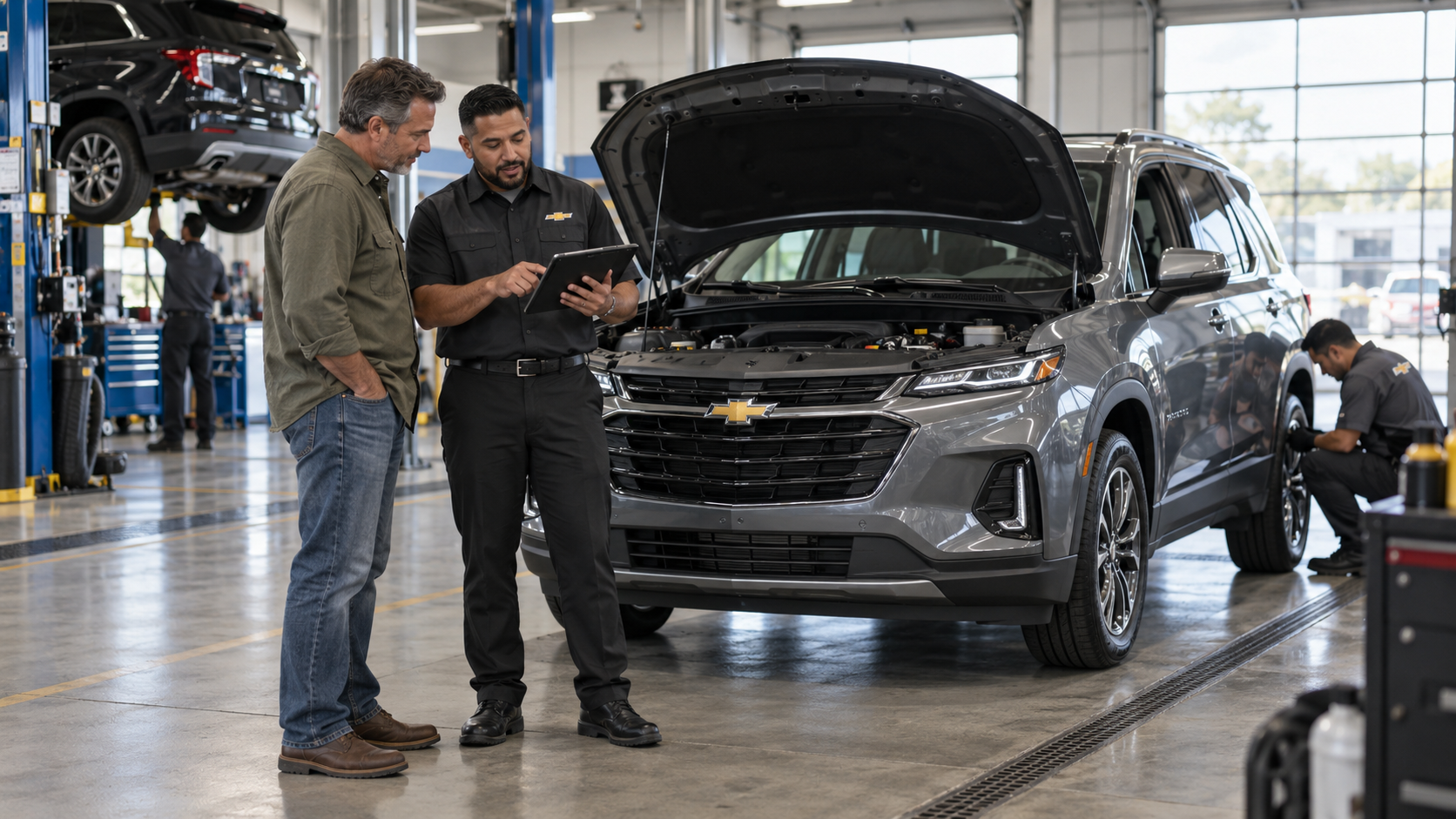
What should be clear before you hand over the keys? Record the requested work, reported concern, contact method, and initial time estimate. That makes the service visit easier to track from the start.Additionally, a Chevy service appointment begins with intake, not with the repair itself. The service advisor creates a repair order based on your request and the details you provide. Therefore, review that information before leaving the service lane.
Routine maintenance usually follows a known procedure. An oil change, tire rotation, or filter replacement follows an established service path. By contrast, an unknown noise or warning light may require diagnostic testing first.
That distinction matters for timing. A scheduled arrival time secures your place in the service process. It does not create an exact completion time for every repair.
Parts availability can also change the schedule. A technician may identify a needed part after inspection. In addition, another repair may require more labor than the original request.
Consequently, a clear check in gives both sides the same starting record. Ask which work appears on the repair order. Also confirm how the team will contact you if the scope or timing changes.
Know What Happens During Inspection and Diagnosis
What happens after the technician begins looking at the vehicle? The next step changes based on routine maintenance, inspection, or diagnosis. Each path uses a different type of review.During routine maintenance, the technician follows the procedure tied to the requested service. A multipoint inspection may also review tires, brakes, fluids, the battery, wipers, and other areas. Therefore, the technician may identify something outside the original request.
A Chevy service appointment can also include diagnostic work. Diagnosis means testing a reported concern before selecting a repair. A warning light or fault code can point technicians toward an area that needs closer testing.
However, the first result does not always identify the exact repair. The technician may need to test wiring, sensors, fluid pressure, or another related component. That work narrows the source of the concern.
Inspection findings and repair approval are also separate steps. Finding worn brake pads does not mean the added repair should begin without discussion. The advisor should explain the finding, proposed work, and updated cost first.
As a result, this separation keeps the visit clear. You know what the technician found and what work was already requested. You also know which added repairs still need your approval.
Expect Updates When the Repair Path Changes
When should the service team contact you? An update is most useful when repair scope, cost, timing, or approval needs change. Those moments give you information needed before the next step.A good Chevy service appointment includes updates with a clear purpose. A useful message should explain what changed and what action is needed from you. Therefore, it should go beyond saying that the technician is still working.
If inspection reveals another concern, the advisor should explain the finding in plain language. The update should also state the proposed repair and revised estimate. In addition, you should know whether the new work changes the expected completion time.
Diagnostic work may require a different update. The technician may confirm the source of the concern after testing. The advisor can then explain the proposed repair and any parts needed.
Timing updates matter when the original estimate changes. A delayed part, added testing, or extra repair work can extend the visit. Therefore, a clear update should tell you what changed and what happens next.
For this reason, communication works best when it arrives at a decision point. That gives you enough information to approve work, ask questions, or plan around a revised pickup time.
Use Pickup to Confirm What Was Completed
What should you know before leaving after service? You should know which work the technician completed and what was found. You should also know whether anything needs attention later.Pickup is the final information handoff in a Chevy service appointment. Therefore, take a moment to review the work before leaving.
Use the final conversation to confirm several points:
- Confirm which requested services and approved repairs were completed during the visit.
- Review any inspection notes that mention tires, brakes, fluids, the battery, or other checked components.
- Ask what technicians found if the appointment involved a warning light, noise, vibration, or other diagnostic concern.
- Confirm whether any future service, monitoring, or follow up work remains after the current visit.
If diagnosis was part of the appointment, confirm the technician’s finding before leaving. Ask which repair was completed and whether another check is needed later.
Finally, make sure any related warning lights or reported symptoms have been addressed as discussed. This final review closes the information loop from the original check in.
Consequently, a clear service visit is not defined only by speed. Clear information at each handoff gives you a much stronger view of the work. You can leave knowing what was requested, what technicians found, and what they completed.