





New Chevy Trailblazer Green Bay
| Sales | ||
| Day | Open | Closed |
| Monday | 8:30AM | 6:00PM |
| Tuesday | 8:30AM | 6:00PM |
| Wednesday | 8:30AM | 6:00PM |
| Thursday | 8:30AM | 6:00PM |
| Friday | 8:30AM | 6:00PM |
| Saturday | 8:30AM | 2:00PM |
| Sunday | Closed | Closed |
Shop Chevy Trailblazer in Green Bay for Efficient Commuting, Winter Driving Confidence, and Flexible Small SUV Ownership
For many drivers in Green Bay, shopping for a compact SUV starts with a practical question. Can it handle the routine of commuting, parking, changing road conditions, and everyday cargo needs without feeling larger than necessary? The Chevrolet Trailblazer stands out in this search because it combines compact dimensions with the utility many shoppers want when moving out of a sedan or downsizing from a larger SUV. Its appeal is often tied to efficient daily use, available all wheel drive confidence, and the flexibility to support workdays, errands, and seasonal travel.
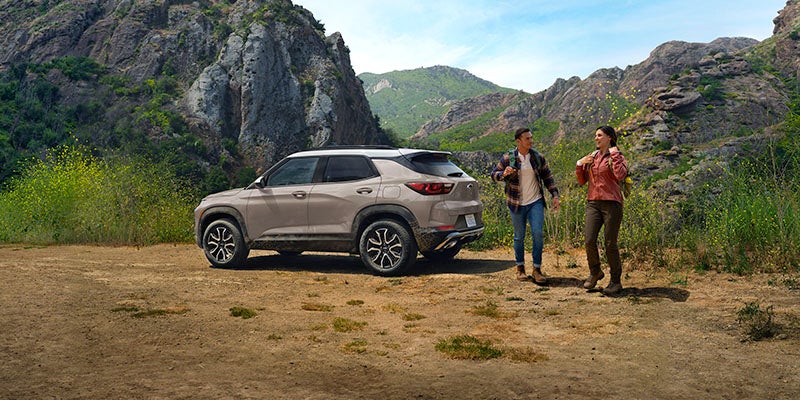
Why the Trailblazer Fits Daily Driving in a Compact SUV
One of the most consistent needs behind Trailblazer searches is commuting comfort paired with easy maneuverability. A compact SUV needs to do more than offer a higher seating position. It should also remain simple to guide through traffic, parking lots, and tighter city areas. The Trailblazer answers that need by keeping its footprint manageable while still giving drivers the visibility and cargo access that often motivate an SUV purchase in the first place.
This matters especially for shoppers comparing the Trailblazer to a sedan. The change is not only about ride height. It is also about how a vehicle supports entry and exit, sightlines around traffic, and usable space for groceries, bags, or equipment that may not fit as comfortably in a trunk. For drivers who want a vehicle that feels adaptable without becoming oversized, the Trailblazer sits in a category that supports both weekday routine and weekend flexibility.
How Available AWD Supports Winter Confidence
In a market like Green Bay, available all wheel drive is more than a box on a feature list. Shoppers often want to know how it affects control when roads shift between dry pavement, slush, standing water, and snow. That is where many vehicle pages fall short. They mention AWD availability without explaining why it matters. In the Trailblazer, available AWD is designed to support traction when the system detects changing grip conditions. That added support can help the vehicle respond more steadily when road surfaces become less predictable.
For winter focused shoppers, this ownership context is important. A driver who travels early in the morning, drives through mixed road conditions, or wants more reassurance during colder months may weigh AWD differently than someone focused primarily on fuel savings. Understanding that distinction helps narrow the right configuration. The decision is not simply whether AWD is available. It is whether the way you drive throughout the year makes added traction support the better long term fit.
- FWD may align with efficiency priorities if most driving is centered around predictable pavement conditions and daily commuting.
- Available AWD may align with seasonal confidence priorities if winter traction, road variability, and weather response are part of the ownership decision.
- The better choice depends on use pattern rather than feature count alone.
That kind of comparison gives buyers a more useful framework than a simple feature list. It connects the drivetrain decision to climate, commute pattern, and ownership expectations.
Fuel Efficiency and Ownership Value Matter in the Decision
Budget timing and long term value remain strong behavioral signals in compact SUV shopping. Some buyers are shopping during tax season. Others are evaluating monthly payment range, fuel use, or trade in timing. In these situations, a model like the Trailblazer often draws interest because it offers SUV flexibility without automatically moving a shopper into a larger and more expensive vehicle class. Fuel efficiency is part of that equation, but so is right sizing the purchase around actual use.
That is why comparing FWD and AWD matters beyond traction. Drivetrain choice can influence efficiency, and efficiency plays into ownership cost over time. Buyers also benefit from evaluating how often they will truly need added traction support versus how often the vehicle will be used for standard commuting. This turns the decision into a clearer ownership question. Are you prioritizing the lowest operating cost, or are you balancing efficiency with added seasonal capability?
The Trailblazer supports this comparison well because its compact SUV format does not force an all or nothing decision. Instead, it allows shoppers to weigh practicality, confidence, and fuel use together. That balance is one reason it remains relevant for buyers who want value without giving up flexibility.
Interior Space and Cargo Flexibility Without Moving Too Large
Another repeated shopper concern centers on usable space. Buyers often ask whether a compact SUV will feel meaningfully more flexible than a sedan and whether it can support changing needs without stepping into a midsize model. The Trailblazer addresses that middle ground by giving drivers an SUV layout with cargo utility that fits everyday routines. This can matter for school bags, household errands, sports gear, strollers, or travel items that need a more adaptable storage area.
What matters most is not simply cargo volume on paper. It is how the space works in normal ownership situations. Liftgate access, seat folding flexibility, and a cabin layout that supports both passengers and changing cargo demands all contribute to whether the vehicle feels useful over time. Shoppers who want an SUV because life patterns are changing often benefit from looking at the Trailblazer through that lens. The question becomes less about maximum space and more about whether the space matches the way the vehicle will actually be used.
Choosing the Right Trailblazer Trim for Your Driving Needs
Trim research is another point where many shopping pages stop too early. Listing trim names is not the same as helping someone decide. The better approach is to connect trim selection to routine. A commuter may prioritize efficiency, straightforward technology, and manageable cost. A winter focused driver may look more closely at drivetrain availability and confidence related equipment. A shopper who expects the vehicle to support longer days, passengers, or more frequent cargo use may weigh comfort and convenience features differently.
That is why the strongest Trailblazer decision is usually made by matching trim to lifestyle rather than choosing by label alone. When you view the model through commuting habits, weather exposure, parking environment, cargo needs, and budget range, the right fit becomes easier to identify. For many buyers, that guidance is more useful than comparing specifications without context. It creates a clearer path toward selecting a Trailblazer that supports the way you drive through the year.
If your search is centered on a compact SUV that can support everyday commuting, help you manage winter conditions, and give you flexible utility without moving into a larger vehicle class, the Chevy Trailblazer is worth a closer look. Exploring available models in Green Bay can help you compare configurations and narrow the version that best supports your daily routine and ownership priorities.
(Note: This article focuses on providing valuable information and does not mention specific pricing, for more information about financing and car buying, please reach out to our dealership.)