





Chevy Dealer Menominee MI
Explore Chevrolet Inventory Before Your Visit
See If You Qualify for a GM Discount
View Current Service and Parts Offers
| Sales | ||
| Day | Open | Closed |
| Monday | 8:30AM | 6:00PM |
| Tuesday | 8:30AM | 6:00PM |
| Wednesday | 8:30AM | 6:00PM |
| Thursday | 8:30AM | 6:00PM |
| Friday | 8:30AM | 6:00PM |
| Saturday | 8:30AM | 2:00PM |
| Sunday | Closed | Closed |
| Service | ||
| Day | Open | Closed |
| Monday | 7:30AM | 5:00PM |
| Tuesday | 7:30AM | 5:00PM |
| Wednesday | 7:30AM | 5:00PM |
| Thursday | 7:30AM | 5:00PM |
| Friday | 7:30AM | 5:00PM |
| Saturday | Closed | Closed |
| Sunday | Closed | Closed |
| Parts | ||
| Day | Open | Closed |
| Monday | 7:30AM | 5:00PM |
| Tuesday | 7:30AM | 5:00PM |
| Wednesday | 7:30AM | 5:00PM |
| Thursday | 7:30AM | 5:00PM |
| Friday | 7:30AM | 5:00PM |
| Saturday | Closed | Closed |
| Sunday | Closed | Closed |
Start Your Chevy Search Near Menominee With a Visit That Moves at Your Pace
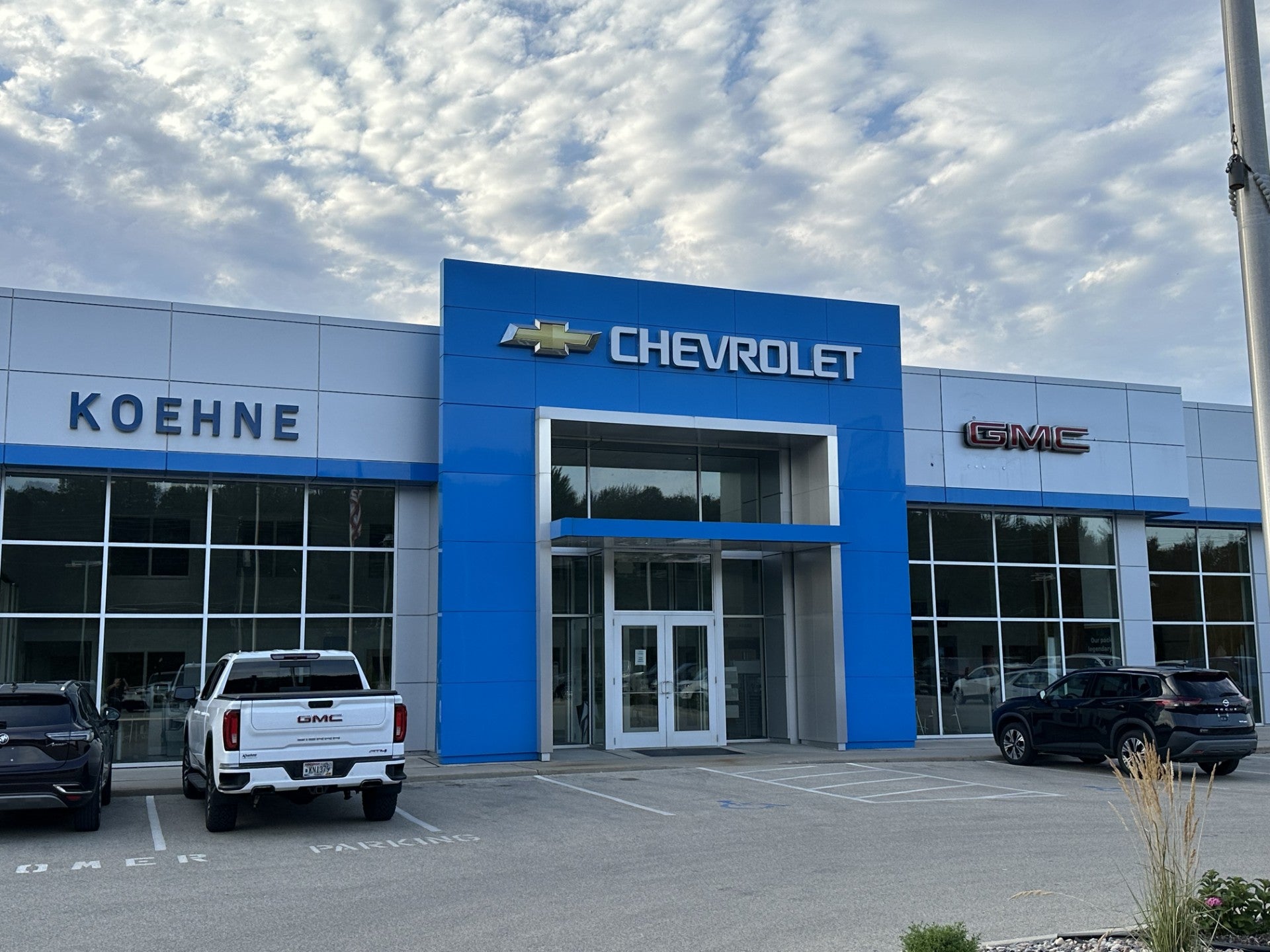
Choosing a Chevy dealer near Menominee, MI should begin with clear information and room to think. Before making the short trip to Koehne Chevrolet GMC in Marinette, you can review inventory, identify your priorities, and decide what you want to accomplish during your visit.
A dealership visit does not have to begin with a purchase decision. It can begin with questions, a closer look at several Chevrolet models, or a test drive. You may also want written figures for later review. Knowing your purpose before arriving keeps the conversation centered on the information you need.
Start With Research Before Leaving Menominee
Online inventory gives you a useful starting point, though it should serve as a filter rather than the final answer. Photos, listed features, mileage, and vehicle details can narrow the field. An in person review still provides information that a screen cannot.
Begin by choosing two or three vehicles that appear to match your needs. Record the stock number, trim, listed equipment, mileage, and advertised price. This creates a reference you can use when contacting the dealership or arriving for your visit.
Availability can change as vehicles are sold, reserved, or moved through dealership preparation. Contacting Koehne Chevrolet GMC before leaving Menominee gives the team a chance to verify that the vehicles remain available. You can also ask whether they are ready for a test drive.
Your first conversation can stay focused on a simple goal. You might want to compare two SUVs, inspect a used truck, or learn which Chevrolet models fit a set budget. You do not need to settle every purchase question before seeing the vehicles.
Narrow Chevrolet Inventory Around Your Needs
A broad Chevrolet lineup becomes easier to review when you begin with the tasks the vehicle must handle. A commuter may prioritize fuel costs, parking ease, seating comfort, and driver assistance technology. A family may place more weight on rear seat access, cargo room, child seat placement, and cabin storage.
A truck shopper may need to review bed length, cab space, trailer ratings, axle configuration, and drivetrain choices. Someone who travels through snow may want to compare front wheel drive, all wheel drive, and four wheel drive choices across several models.
Create a short list of nonnegotiable items before comparing trims. Then create a second list of features you would enjoy but could leave out. This distinction keeps a higher trim from drawing attention away from the equipment you will use most.
- Passenger space: Check seating access, legroom, headroom, and cargo shape.
- Drivetrain: Compare two wheel drive, all wheel drive, and four wheel drive choices.
- Travel needs: Review fuel type, commute distance, towing requirements, and parking space.
- Purchase path: Compare new, used, and Chevrolet Certified Pre Owned vehicles.
Avoid choosing from photos alone. Seat position, visibility, step in height, control placement, and cabin storage can change how well a vehicle fits your routine.
Set the Pace When You Arrive
A clear visit begins with a clear purpose. Tell the dealership representative what you want to complete during that visit. You may want to inspect two vehicles, complete one test drive, receive a trade appraisal, or review written pricing.
That direction gives the conversation structure. It also keeps several purchase stages from being blended together before you are ready.
Ask for time to inspect each vehicle before discussing payment. Sit in the front and rear seats. Open the cargo area. Check entry height, outward visibility, storage, and control placement. Bring anyone whose transportation needs will shape the choice.
Questions are part of the process. Ask for an explanation when trim content, warranty coverage, vehicle history, or pricing is unclear. Request written information when several numbers are being discussed.
You can also pause the visit. Leaving to review information does not erase the work you completed. It gives you time to compare the vehicle and agreement without showroom activity competing for your attention.
Turn the Test Drive Into a Useful Comparison
A test drive should answer specific questions about fit. Driving without a plan may leave you remembering only that the vehicle felt new or different.
Before moving, adjust the seat, mirrors, steering wheel, climate controls, and driver displays. Check whether the seating position gives you a clear view around the vehicle. Confirm that commonly used controls are easy to locate without looking away from the road for too long.
During the drive, use roads that resemble your normal travel near Menominee and Marinette when the route permits. Include lower speed streets, a faster stretch, turns, stops, and a parking maneuver.
- Traffic entry: Note how the vehicle responds while entering a faster road.
- Braking: Check pedal response during ordinary stops.
- Steering: Compare effort at city and highway speeds.
- Cabin comfort: Listen for road noise and check seat support.
- Visibility: Review mirrors, camera views, and sightlines.
- Parking: Test the turning radius in a realistic space.
After parking, compare your notes instead of relying on memory. A vehicle with more equipment may still be the weaker fit if the seat causes discomfort or the controls feel distracting. A simpler trim may serve you better when it carries the equipment you will use and leaves out costly additions you do not need.
When comparing two vehicles, drive them close together when possible. Similar traffic, road surfaces, and routes make the contrast easier to judge.
Review Vehicle Price, Trade Value, and Financing Separately
The purchase discussion becomes clearer when each number is reviewed on its own. Begin with the vehicle price. Ask which dealership charges, taxes, registration costs, accessories, protection products, rebates, or incentives appear in the total.
Confirm which programs require financing through a certain lender or meeting stated eligibility rules. A discount may have separate qualifications, so ask the team to explain each program before including it in your comparison.
Next, review the trade appraisal as a separate figure. A trade value may reflect mileage, age, equipment, mechanical state, cosmetic state, local demand, and current wholesale data. If money remains owed, ask how the payoff changes the amount applied to the next purchase.
Then review the financing proposal. Study the amount financed, annual percentage rate, term length, estimated monthly payment, and total cost across the agreement. A lower monthly figure can come from a longer term, a larger down payment, a different rate, or a changed purchase amount.
Payment alone does not reveal the whole transaction. Two proposals with similar payments can carry different terms and total costs. Ask for a written breakdown that keeps the vehicle price, trade figure, down payment, lender terms, and optional products visible.
Lease shoppers should review mileage limits, term length, the amount due at signing, end of lease charges, and wear guidelines. Financing leads toward full ownership after the agreement is paid. Leasing covers a set period with return requirements.
Prepare for the Next Step Without Rushing
Casual browsing and test driving usually require less paperwork than completing a purchase or credit application. Bring a valid driver license for the test drive. Ask the dealership what else will be required before arriving.
When you plan to apply for financing or take delivery, the dealership or lender may request several documents.
- Current insurance information
- Proof of income or employment information
- Proof of address
- Trade title, registration, payoff details, and all keys
- Down payment information
- A co applicant's documents when relevant
Requirements can vary by lender and transaction. Confirm the requested items with Koehne Chevrolet GMC before the visit.
Read each document before signing. Check names, addresses, vehicle identification number, mileage, prices, products, rates, dates, and payment terms. Ask for corrections when something does not match the agreement you reviewed.
Look Beyond the Purchase Day
The dealership relationship may continue through maintenance, warranty questions, parts, accessories, recalls, and repair needs. Ask where Chevrolet service is completed, how appointments are scheduled, and which maintenance resources are available.
You may also want to learn how warranty information is accessed and which records should be retained. Keeping service invoices and maintenance records together makes future questions easier to address.
Choosing a dealership involves more than locating a vehicle. Clear communication before purchase and accessible support afterward both deserve consideration.
What questions should you ask when buying a used car?
Ask for the vehicle history, title status, inspection records, reconditioning details, included coverage, and known repair needs. Confirm whether an independent inspection is permitted. Compare the mileage and current state with similar vehicles before making a choice.
What should a first time shopper compare before choosing a dealership?
Compare how clearly each dealership explains inventory, written pricing, trade figures, financing terms, and next steps. Notice whether you receive direct answers and enough time to review the information. Service access after purchase also deserves consideration.
Can you visit a dealership only to browse?
Yes. You can visit to inspect vehicles, compare seating, ask questions, or gather written information. State your goal when you arrive. A browsing visit can end without a test drive, application, or purchase.
What should you discuss before financing a car with bad credit?
Start with a monthly budget limit and the cash you can safely place down. Ask about term length, estimated rate, lender documents, and the total amount financed. A lender must review a completed application before issuing an approval decision.
Note: This article focuses on providing useful information and does not mention specific pricing. For more information about financing and car buying, please reach out to Koehne Chevrolet GMC.