





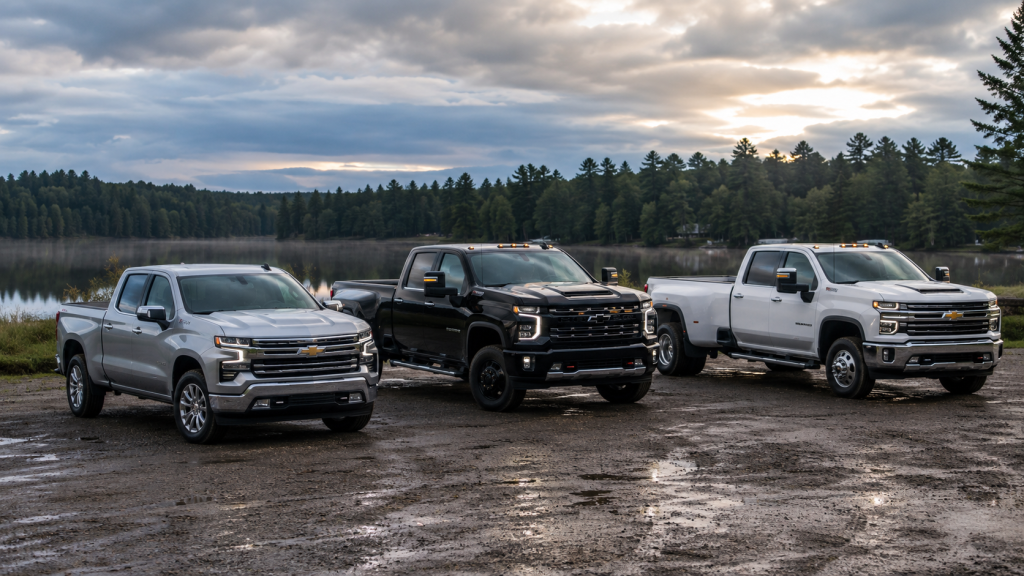
A Chevy truck towing comparison looks straightforward until you get into the details that shape the right answer. Most shoppers start with a towing number, find the truck that clears their threshold, and assume the decision is made. That approach holds up until the first time a loaded trailer, a full cab, and a bed full of gear push the truck past what it can safely handle, even though the window sticker suggested room to spare. Choosing between the Silverado 1500 and the HD lineup means understanding a few things specs alone do not communicate: how you plan to use the truck most days, how payload and towing interact, and what your configuration means for your legal and safe operating limits. For drivers near Marinette shopping at Koehne Chevrolet, this guide walks through each comparison point in the order that makes the decision clearest.
Start With How You Will Use the Truck, Not What It Can Do at Maximum
The most common mistake in a truck comparison is leading with peak numbers. A truck’s maximum tow rating exists under a very specific set of setup variables: a particular cab, a particular bed, a particular engine, and no additional weight beyond the hitch load. Most buyers will never operate under those exact variables, which means the maximum number is a ceiling, not a working figure.
A more useful starting question is how frequently you will ask the truck to do its heaviest work. A buyer who tows a fishing boat to a northern Wisconsin lake a dozen weekends per year has different needs than a contractor who runs a loaded flatbed trailer to job sites five days a week. Both scenarios might point to the same tow rating on paper, but the wear demands, the powertrain load cycle, and the long-term reliability requirements are very different.
For occasional towing at moderate loads, the Silverado 1500 with the right engine and configuration handles the job without the added cost, size, and fuel consumption of the HD platform. For sustained heavy towing, repeated high-payload work, or fifth-wheel and gooseneck applications, the 2500HD and 3500HD are built to a fundamentally different level of daily demand. Getting that distinction clear before looking at any spec sheet makes every other comparison point easier to evaluate.
What the Towing Number Does Not Tell You
Towing capacity is the figure buyers find first, but it describes only one part of what the truck can manage. The number on the sticker reflects the maximum trailer weight the truck can pull under ideal setup variables. It does not account for what else is already consuming the truck’s rated capacity before the trailer attaches. That is where payload rating enters the picture, and where many comparisons have to be rebuilt from scratch once a buyer understands the full load equation.
Payload is the total weight a truck can carry above its own curb weight. It includes passengers, cargo in the bed, and the tongue weight of any trailer connected to a conventional hitch. Tongue weight on a standard trailer runs between ten and fifteen percent of the trailer’s total loaded weight. On a heavy trailer, that figure alone can consume a significant portion of available payload before a single tool or bag goes in the bed. Several variables compound this quickly:
- A crew cab with four passengers at average weight adds roughly 700 to 800 pounds to the truck’s working load. That weight comes directly out of payload, narrowing the margin between a comfortable operating range and an overloaded one.
- Aftermarket accessories, including bed liners, toolboxes, and lift kits, reduce the factory payload rating because they add to the truck’s real-world curb weight without changing what the sticker says.
- GVWR, or Gross Vehicle Weight Rating, is the maximum the truck and everything it carries can weigh together. When the combined weight of the truck, occupants, bed cargo, and tongue load reaches that number, the truck is at its legal limit regardless of what the tow rating says. Operating above GVWR has direct consequences for braking distance, suspension response, and warranty coverage.
Payload Rating and Why It Changes the Comparison
Payload rating is where the Silverado 1500 and the HD trucks separate most clearly in real-world use. The half-ton platform is structured around a balance of ride quality, fuel economy, and moderate load demands. That balance requires a suspension and frame tuned for a payload range that sits well below what the 2500HD and 3500HD are rated to carry. The HD trucks use a heavier frame, a higher-capacity suspension, and powertrain components rated for repeated stress at the upper end of their load range.
For a buyer whose heaviest load is a weekend camper trailer and occasional landscaping runs, the 1500 payload rating is sufficient and the ride quality during daily driving is noticeably more comfortable. For a buyer running a commercial trailer, hauling heavy equipment, or managing a fifth-wheel connection that requires a higher pin weight rating, the 1500 payload ceiling becomes a constraint. The 2500HD with a diesel powertrain carries a payload rating that gives a contractor or farmer a real working margin, a number that does not have to be carefully budgeted against every trip.
The clearest test is to add up the realistic load the truck will carry on a typical heavy-use day: full cab, standard bed cargo, and the tongue weight of the trailer at its normal loaded weight. If that total approaches or exceeds the 1500 payload rating, the HD platform is not an upgrade. It is the appropriate tool for the job.
Cab and Bed Configuration as a Work Decision
Configuration choices shape daily function more than most shoppers expect when they are focused on towing and payload numbers. The cab and bed combination a buyer selects governs how the truck serves its most common daily role, which is rarely its heaviest towing scenario.
A regular cab with a long bed maximizes bed space and reduces overall vehicle length, which matters for buyers who use the truck primarily as a work tool and rarely carry more than two occupants. A crew cab with a short bed trades bed length for rear passenger space, which suits a family-use truck that tows or hauls on weekends. A double cab with a standard bed sits between those two and works well for buyers who need occasional rear seat access without giving up as much bed length.
The weight implications of cab choice also feed back into payload. A crew cab adds weight relative to a regular or double cab setup. For buyers who are already working close to their payload ceiling, that weight difference narrows the available margin further. Drivers near Koehne in Marinette who use their trucks primarily for work during the week and family trips on weekends find the double cab configuration gives them the most balanced fit without committing to either extreme.
When the Silverado 1500 Is Enough and When HD Makes Sense
The clearest way to resolve this comparison is to run through specific use-case thresholds. The Silverado 1500, properly configured with the available 5.3-liter or 6.2-liter V8, covers a wide range of towing and hauling needs without requiring the buyer to step into the HD platform’s higher cost, larger footprint, and firmer ride. The 2500HD and 3500HD exist for buyers whose regular working demands exceed what the half-ton was built to sustain across a full ownership cycle.
- The Silverado 1500 is the right starting point for buyers towing a boat, a single-axle utility trailer, a smaller camper, or a mid-size recreational trailer on a recreational schedule. With the right configuration it handles those loads with room to spare.
- The 2500HD becomes the more defensible choice when towing weight approaches or exceeds 10,000 to 12,000 pounds on a regular basis, when fifth-wheel or gooseneck applications are part of the plan, or when the truck will carry heavy commercial loads in the bed on a daily schedule.
- The 3500HD is the right platform for buyers running dual-rear-wheel configurations, managing high pin weights on larger fifth-wheels, or hauling at the upper range of what a one-ton platform supports. For most buyers who land at this tier, the application is commercial or agricultural.
For shoppers in the Marinette area working through this decision, Koehne Chevrolet stocks across the full Silverado lineup and the team is familiar with the use cases common to the region: recreational towing on northern Wisconsin waterways, seasonal hauling, and work-truck configurations for local trades and agriculture. Bringing a clear picture of how the truck will be used on its heaviest day gives the conversation a real starting point, one grounded in your specific load and schedule, not a generic spec-sheet exercise.
Connect with us

