




Finding a trusted local Chevy dealer is one thing. Staying confident in that choice for years afterward is another. For drivers in Marinette, Menominee, and the surrounding area, the relationship with a dealership rarely ends at the point of sale. It continues through every oil change, every warranty question, every trade conversation, and every call you make when something unexpected happens with your vehicle. Koehne Chevrolet has built its reputation across those moments, not just the ones that happen in the showroom. Understanding what makes a smaller-market dealership easier to work with over time comes down to a few things that large-volume stores simply cannot replicate at the same level.
What the First Visit Sets Up
The first transaction at any dealership creates more than a sale record. At a community store, it creates a relationship file that stays active. The salesperson who helped you configure your Silverado or your Equinox is often the same person answering your call six months later when you want to know about trade-in timing or an available incentive. That continuity is not incidental. It is a direct result of the staff structure at a dealership that is not cycling through dozens of new hires each quarter.
At high-volume stores, staff turnover creates a re-explanation problem. Every return visit requires a buyer to rebuild context: what they drive, what they paid, what matters to them. At Koehne, that context stays intact. The team is familiar with your purchase history, your preferences, and your vehicle without requiring you to start from scratch. For buyers who plan to stay in their vehicle for several years and need ongoing access to the dealership, this difference is not subtle. It compounds over time into a noticeably easier experience.
How Service Works Differently at a Local Store
Service is where the long-term dealership relationship either holds or breaks down. At a small-market dealership, the path between you and a resolution is shorter. There are fewer departments to move through, fewer approvals to wait on, and a service advisor who is more likely to recognize your name before you explain why you are calling. That structure changes the pace and the tone of every service interaction.
A few things work differently at the local level that matter most to repeat customers:
- Scheduling tends to move faster because the service bay is not operating at the volume pressure of a metro-area store. When you call Koehne to schedule a recall appointment or a seasonal inspection, the conversation is direct and the timeline is clear from the start.
- Warranty and recall questions get answered by the same team handling the work. There is no separate intake team routing your concern through a queue before a technician ever sees the ticket. The communication is tighter and the wait for answers is shorter.
- Follow-up happens. If a part needs to be ordered or a repair requires an extra day, a smaller store communicates that without prompting. You are not left waiting for an update that never arrives.
Fewer Handoffs, Clearer Answers
One of the more frustrating aspects of working with a large dealership is the number of people a customer has to move through before reaching a straight answer. A service question gets routed to a service advisor, who checks with a technician, who escalates to a manager, who loops back to the advisor before anything gets communicated to the customer. By the time the answer arrives, the context has often shifted slightly at each step. Small-market stores eliminate most of that chain.
At Koehne, the structure keeps the customer closer to the source. The person you speak with about your service estimate is close enough to the work itself to give you a grounded answer. This matters most in three situations:
- When a repair is more involved than the initial estimate anticipated, and you need to decide whether to proceed. A direct conversation with someone connected to the actual diagnosis gives you a more complete picture than a relayed summary.
- When you are evaluating a trade-in and want to understand how your vehicle’s service history affects its value. Staff who know the vehicle’s record can speak to that honestly rather than reading from a database output.
- When a warranty question sits in a gray area and requires someone to advocate on your behalf with GM. A community-based dealership with an established reputation for honest dealings has a strong incentive to push for the right outcome for its customers, because those customers are also its neighbors.
What the Community Connection Changes
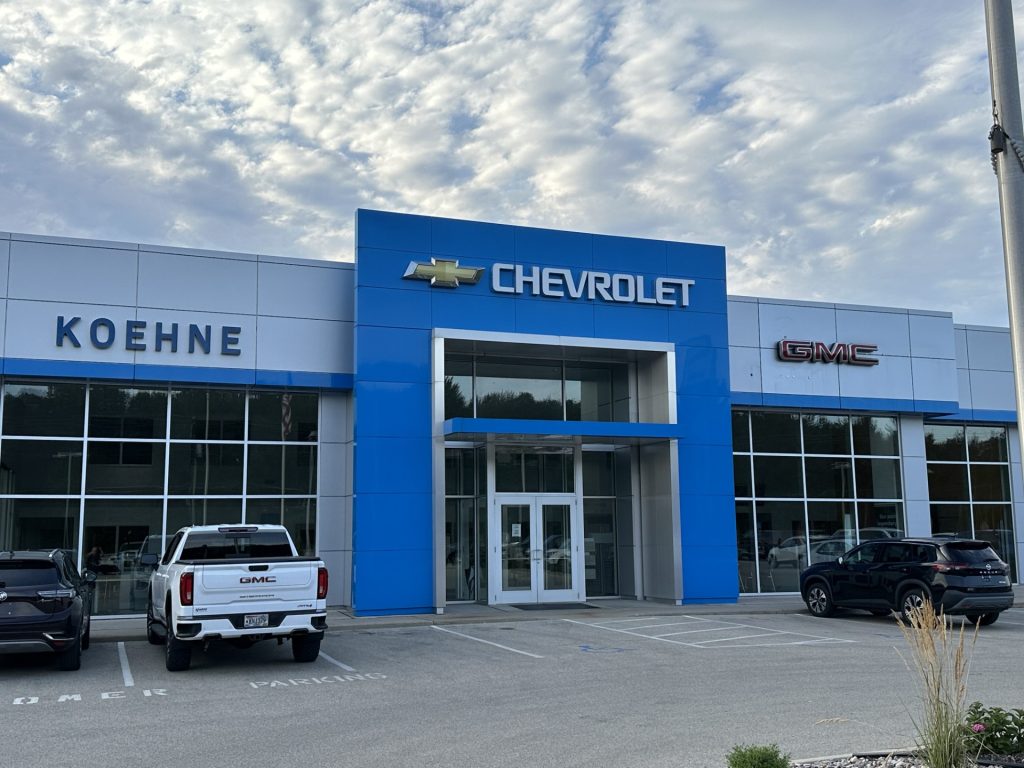
A dealership rooted in its community operates under a different kind of accountability than a high-volume store drawing buyers from a wide regional radius. Koehne Chevrolet has served Marinette, Menominee, and Oconto for decades. In a market that size, a dealership’s reputation is not measured by quarterly volume numbers. It is measured by what the people at the gas station, the hardware store, and the school parking lot are saying about their experience.
That accountability shapes how the dealership approaches every interaction. A buyer who leaves with a bad experience is not an anonymous transaction. They are someone who attends the same events, shops the same streets, and talks to the same people the dealership team does. That reality pushes the service standard in a direction that large suburban stores, drawing from a much wider and more anonymous pool of customers, simply cannot match through policy alone.
For shoppers who want to buy a Chevy in the Marinette area and keep working with the same team for years, that community foundation is not a sentimental detail. It is a functional advantage that shows up in every service visit, every trade conversation, and every phone call that happens long after the original paperwork is signed.
Connect with us

